
Forest ateliera mindful fashion practice exploring transformation through existing textiles.
Things come together slowly here.
Materials arrive with their own past
— worn, kept, or left aside.There isn’t a strict way of choosing.
Sometimes it’s quick, almost instinctive.Something feels right, and stays.Then time is spent adjusting, composing, listening.Pieces shift.Edges meet.A form begins to hold.
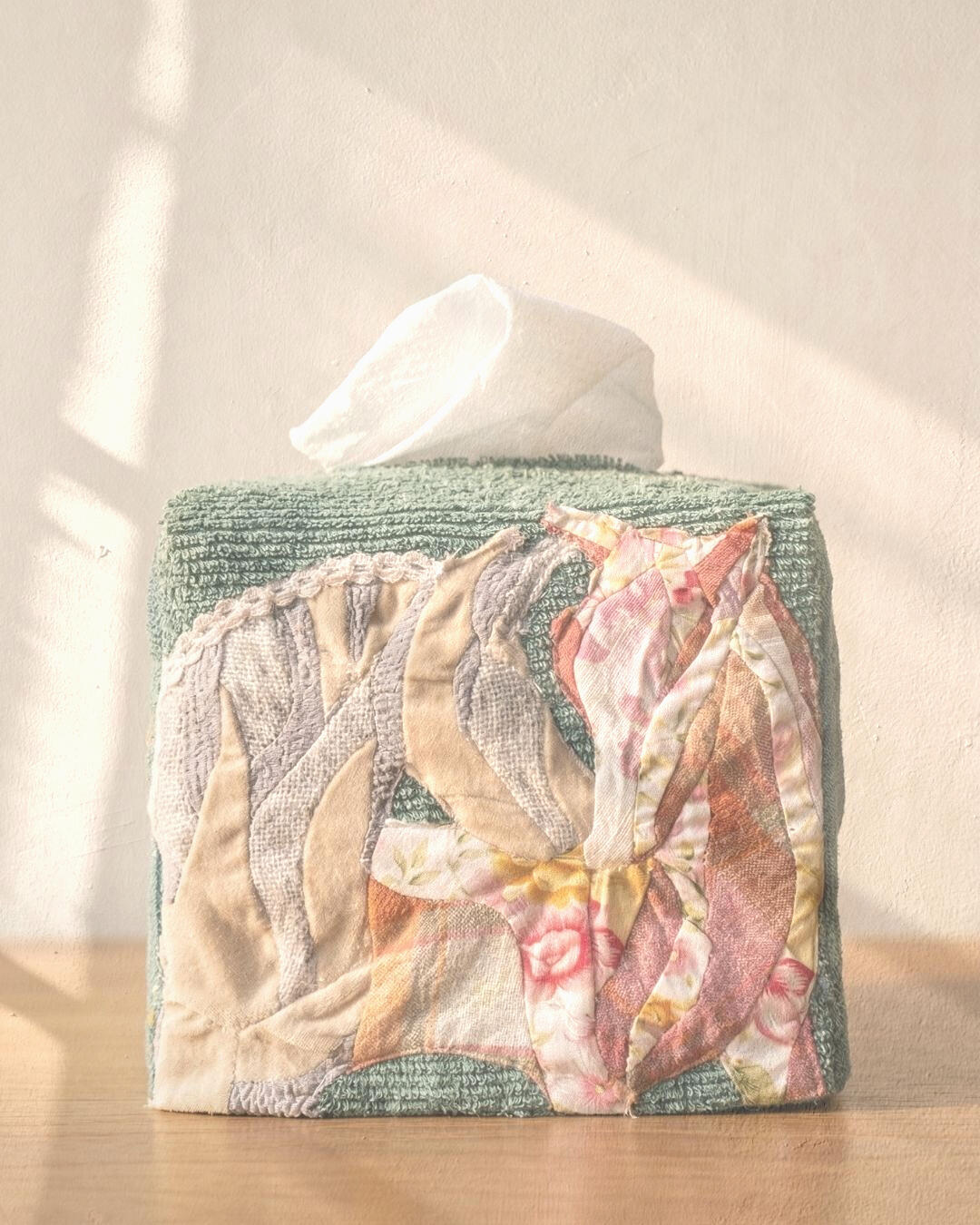
Walking Together
Textile composition exploring movement, companionship, and emotional transformation.
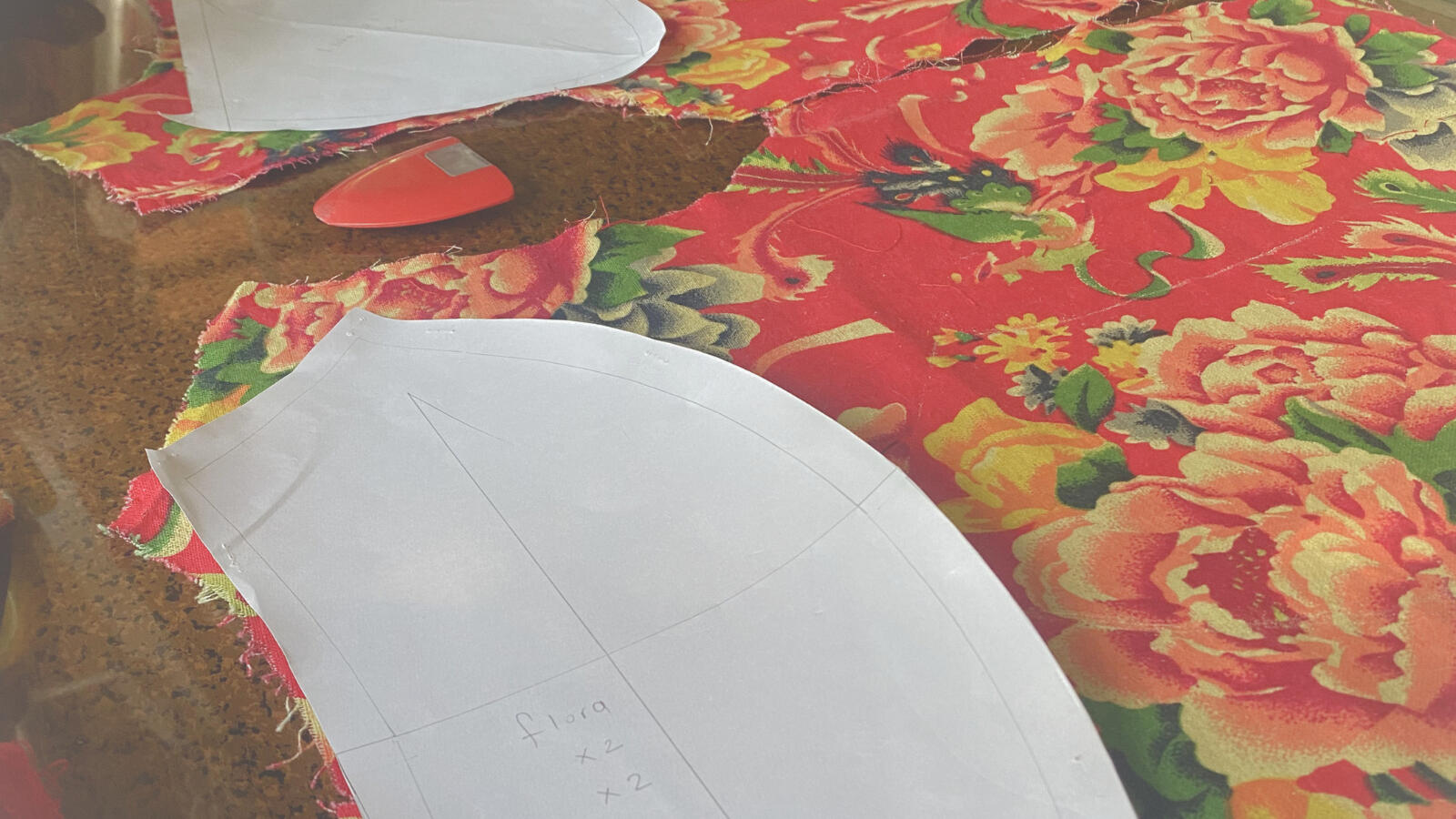
Existing materials are not treated as waste, but as carriers of memory and future possibility.
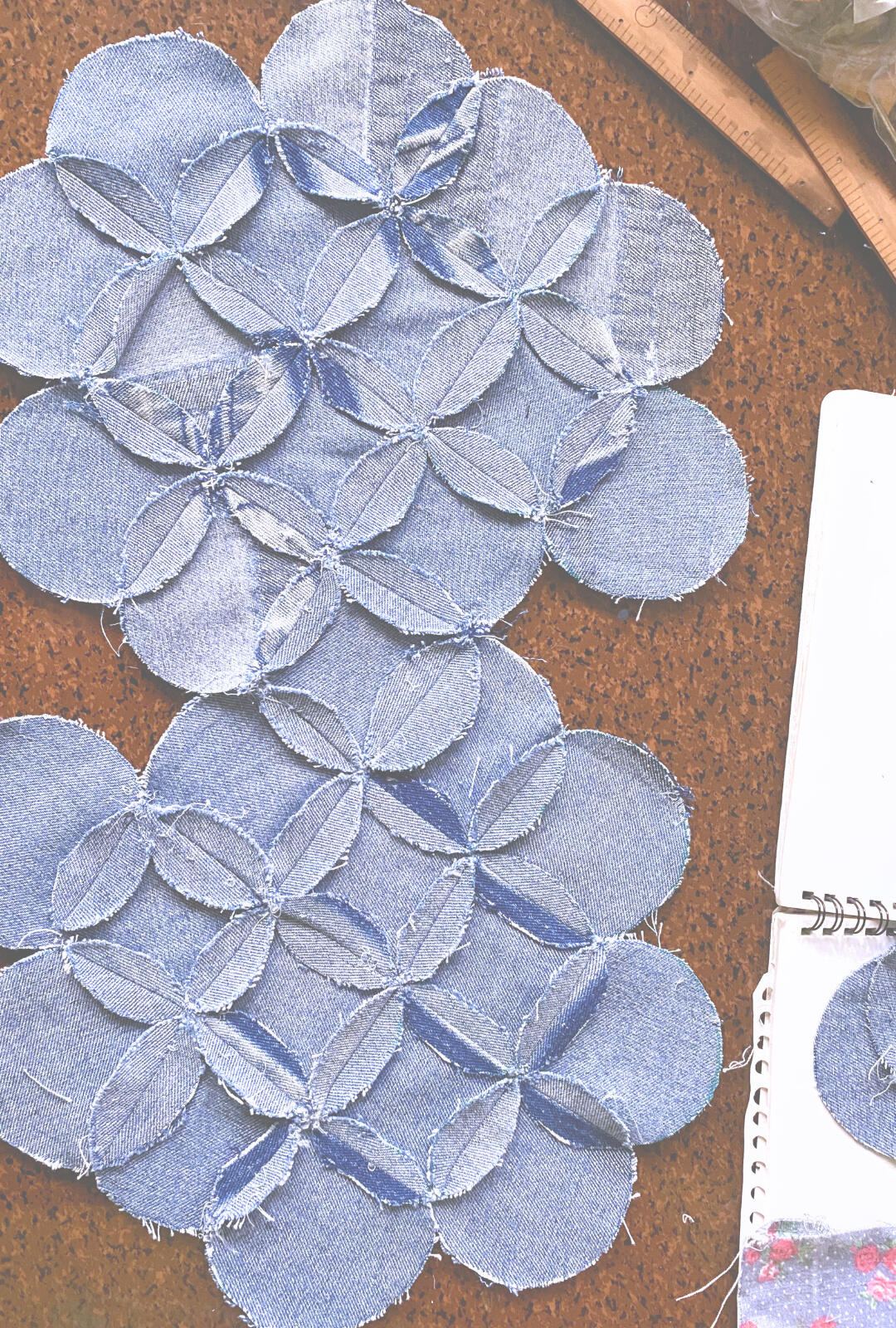
Genie: the Weaver and the Spirit
The same pattern system can be folded and reassembled into new wearable forms.
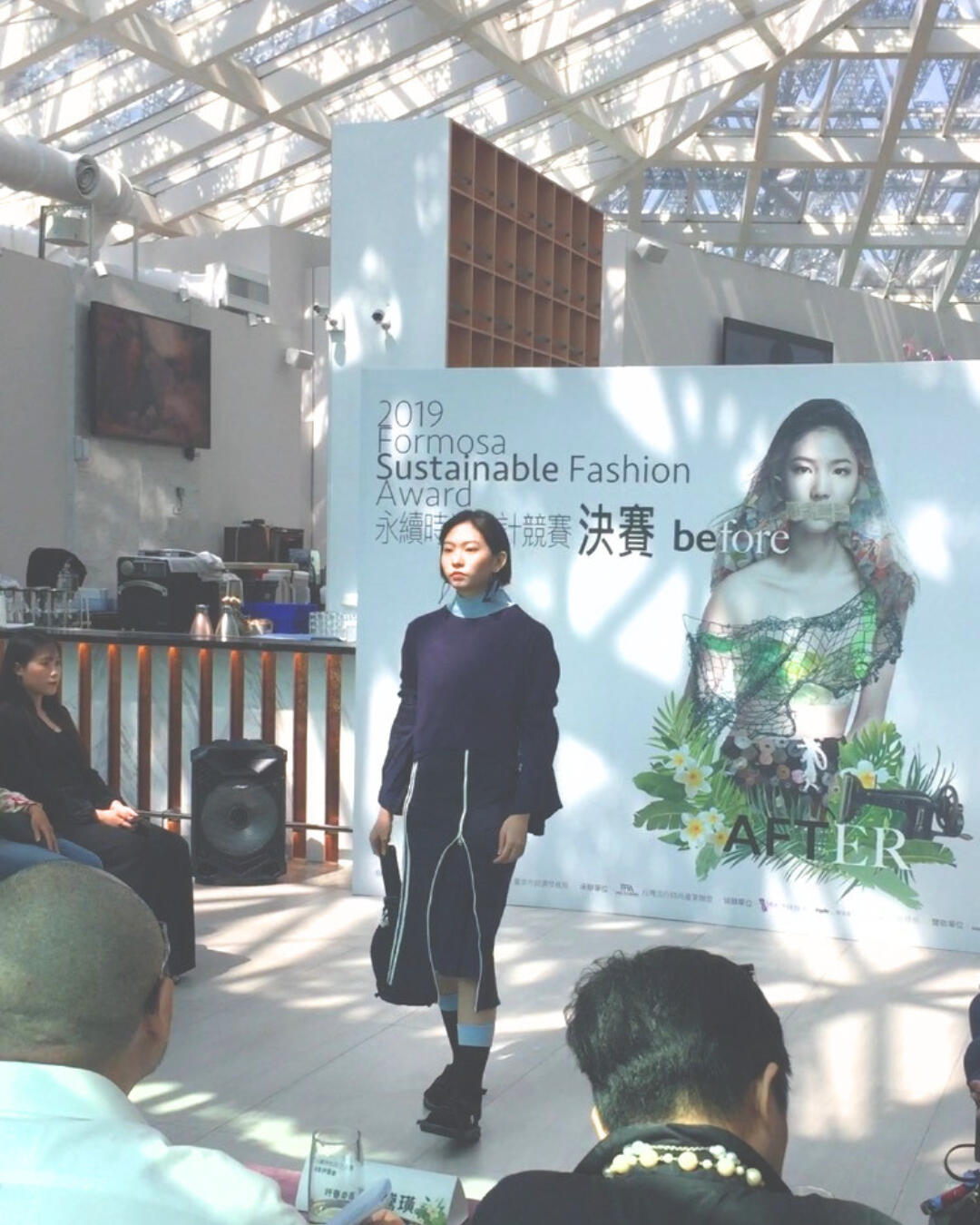
WHO’S UNIFORM
This project marked a turning point — from designing garments to questioning their movement, and eventually, to working with what already exists.
three worn garments recomposed through large-scale textile preservation,
allowing abrasion and aging to remain visible
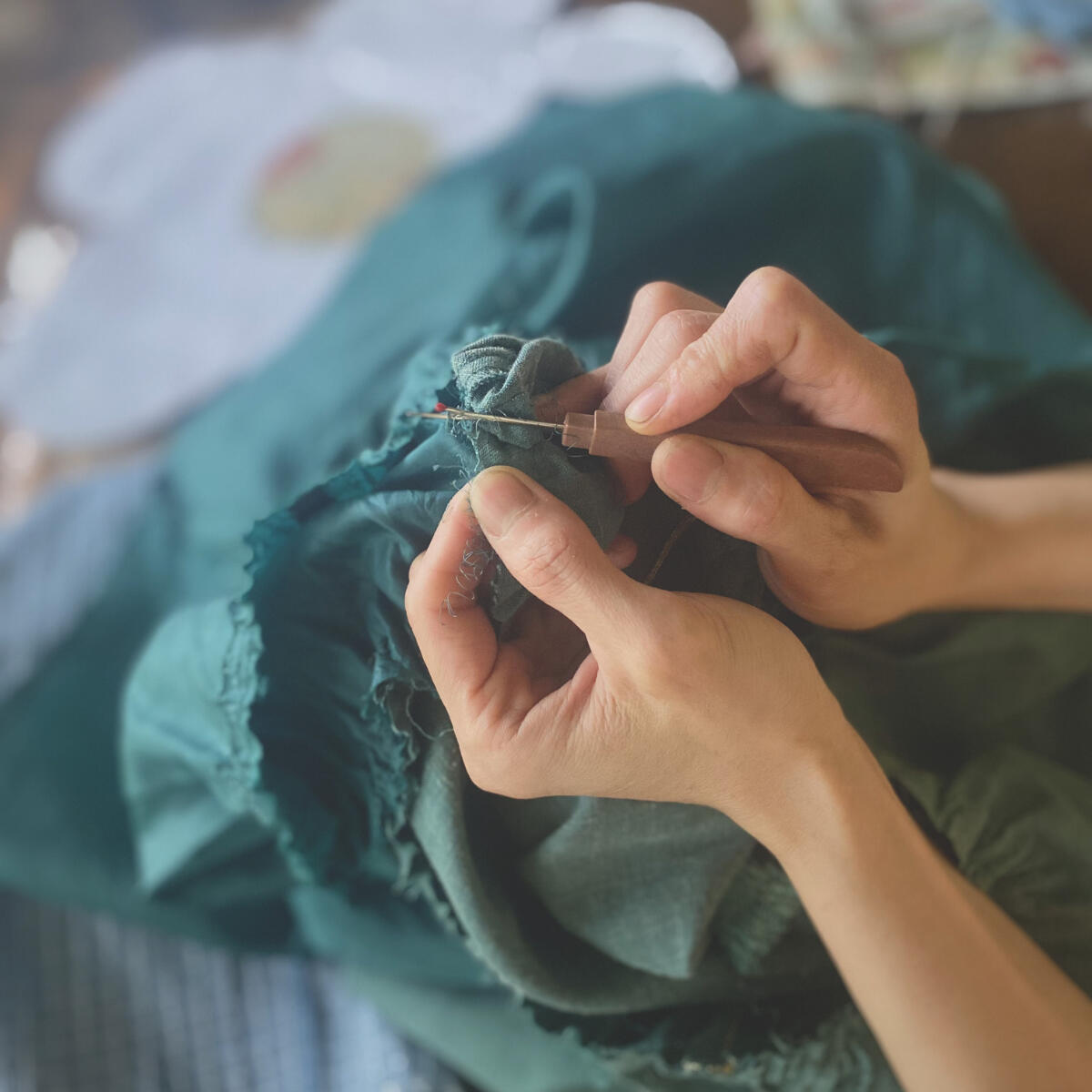
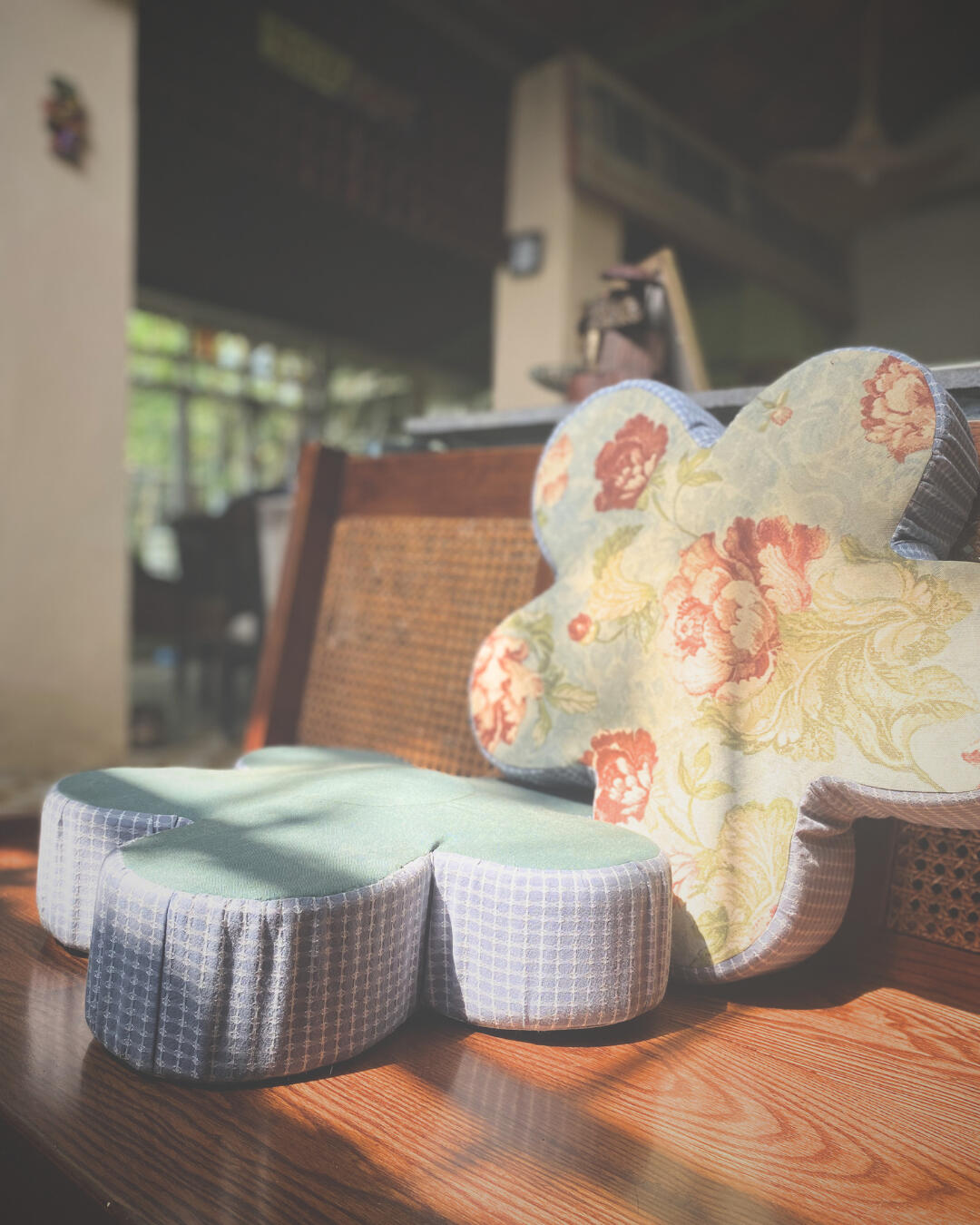
HorngWave works with garments already in circulation — gathering, recomposing, allowing them to continue differently.The practice moves between garments, objects, installations, and material listening.Working between Vietnam and Taiwan, it explores how awareness can move through material, and how making can become a continuation rather than production.
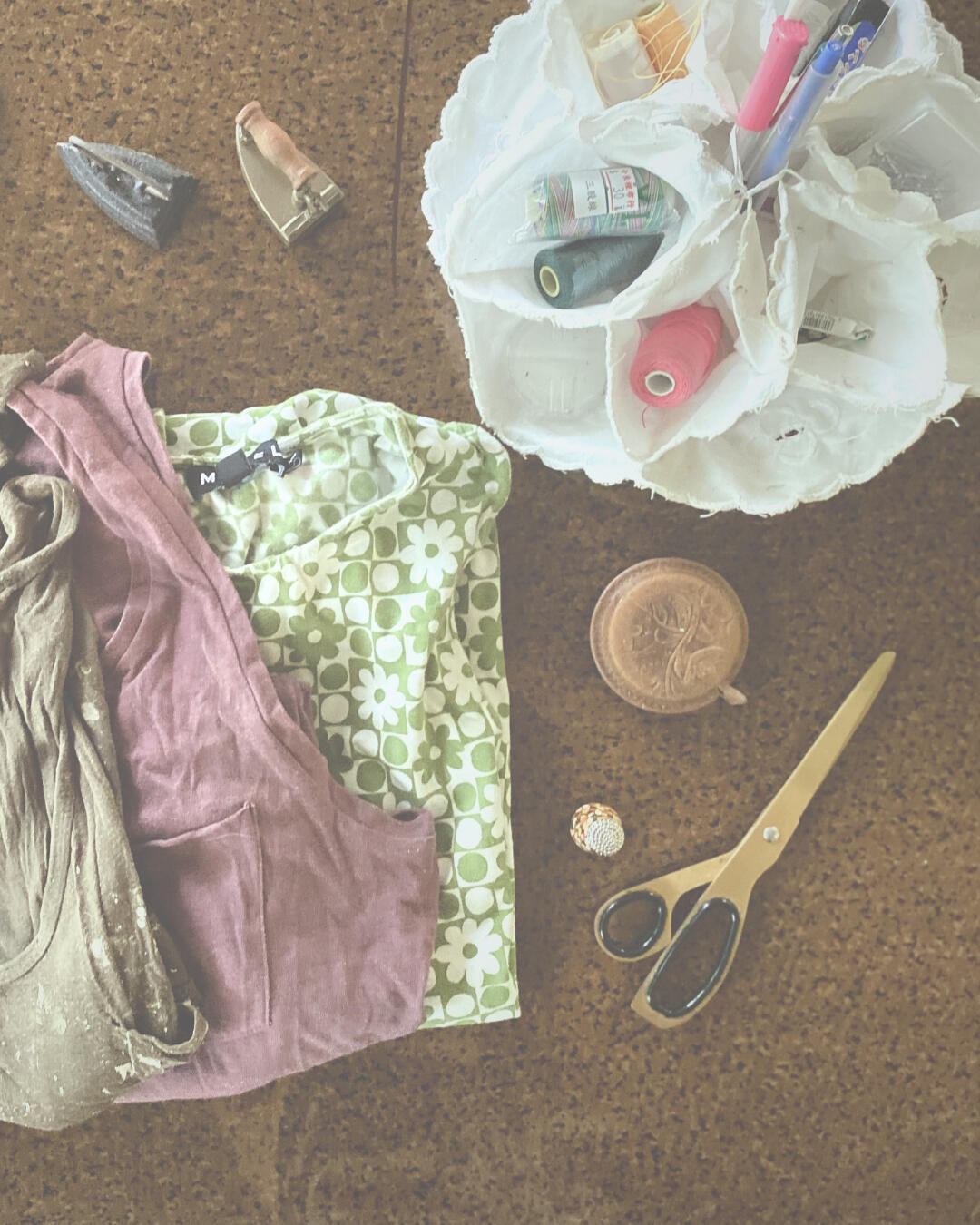
walking together
a year of walking together.
warmth instead of burning,
blossoms when the season is right.
They say the Horse is fast and fiery.
But this year, I felt something quieter —
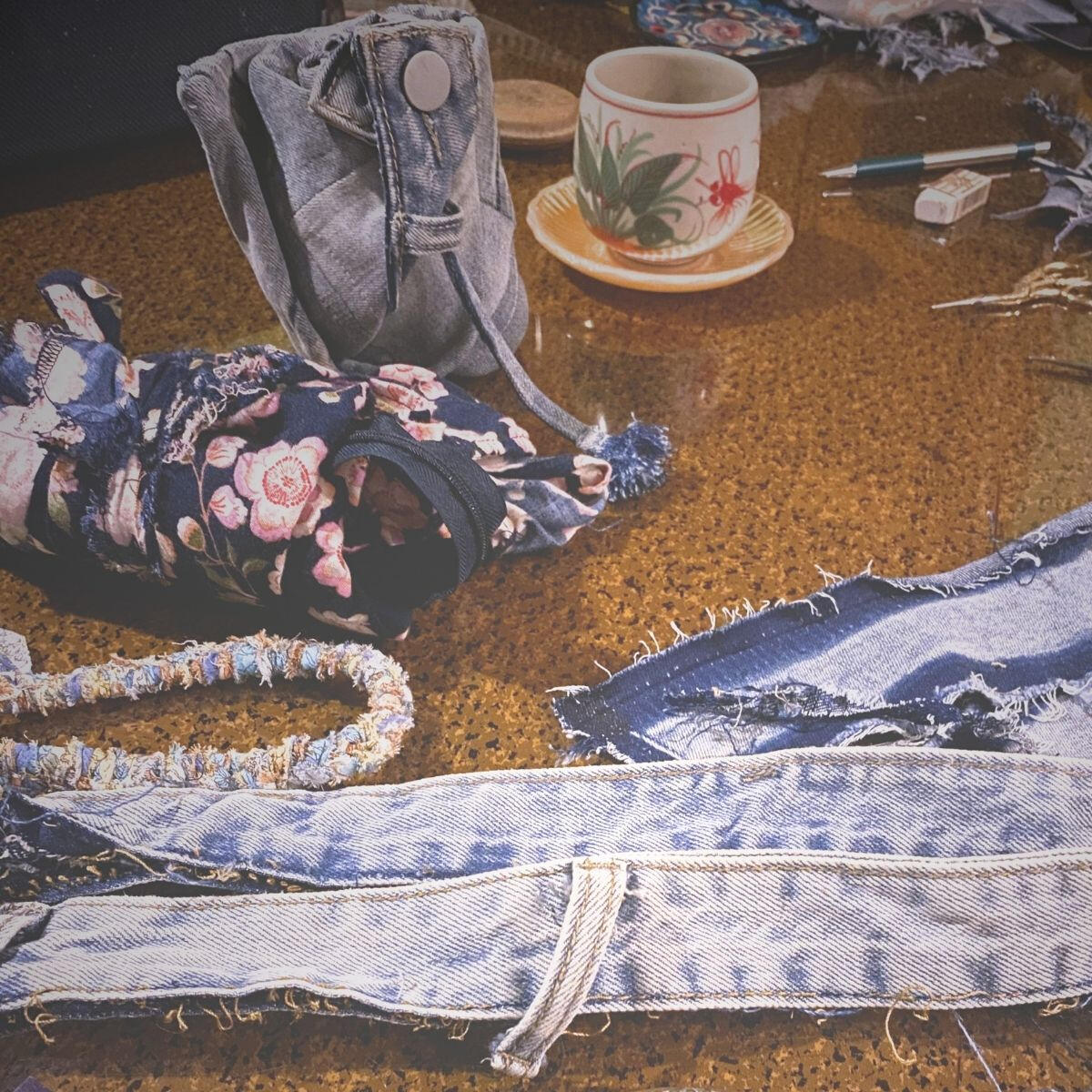
made from leftover fabrics composed, sewn, pressed, adjusted.
Though only 11 × 14 cm,
it holds nearly a month of quiet work.
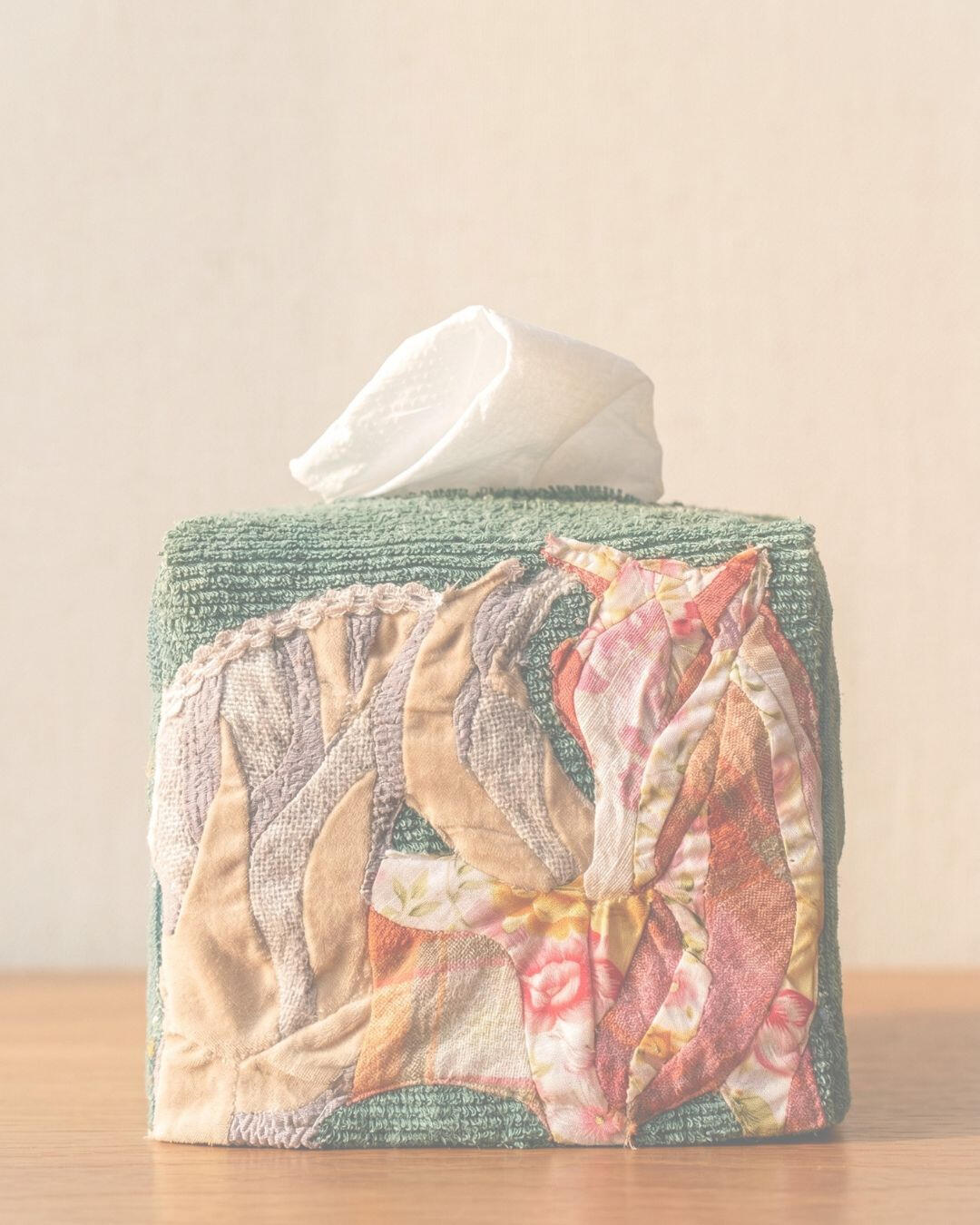
A small piece, shaped slowly from what remained.
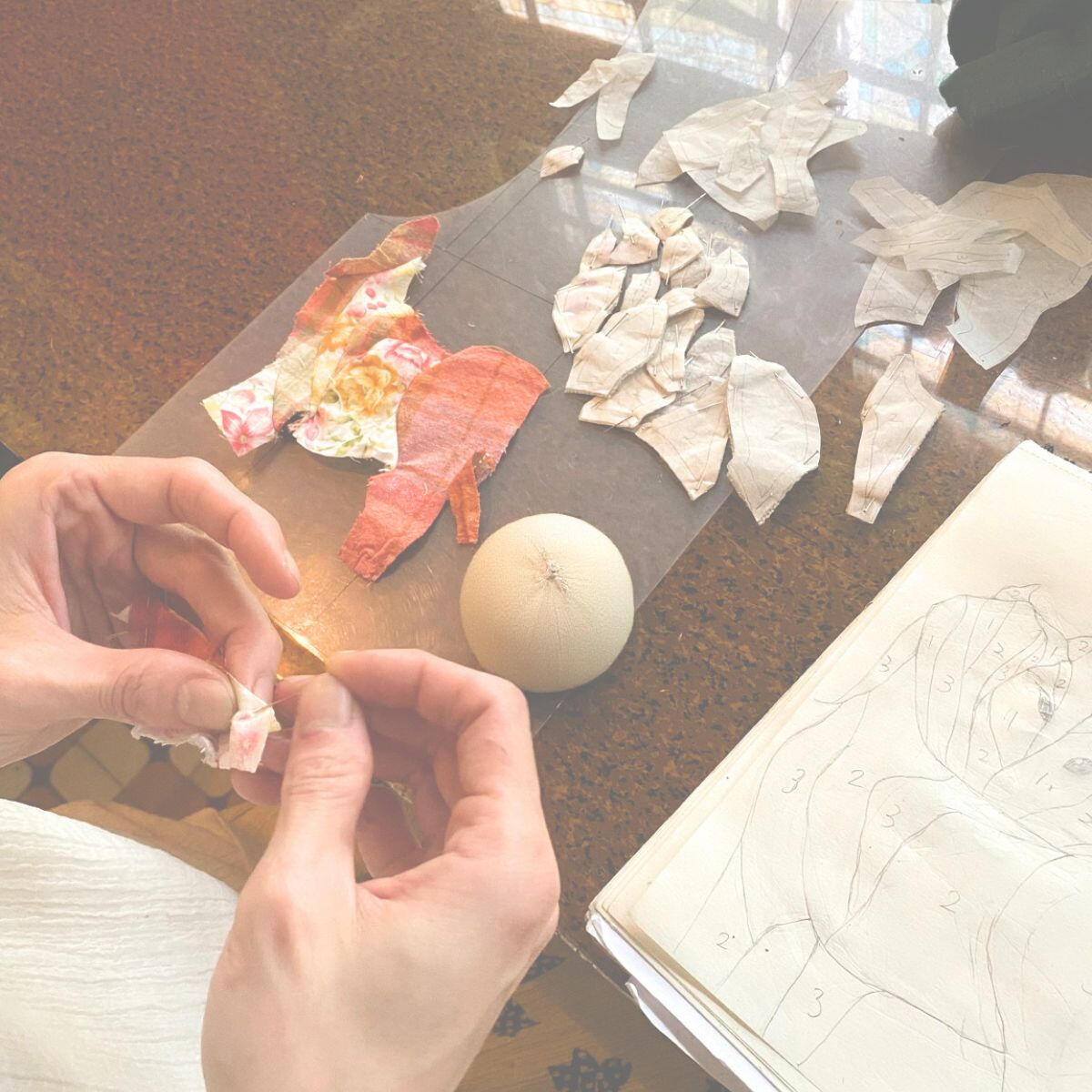
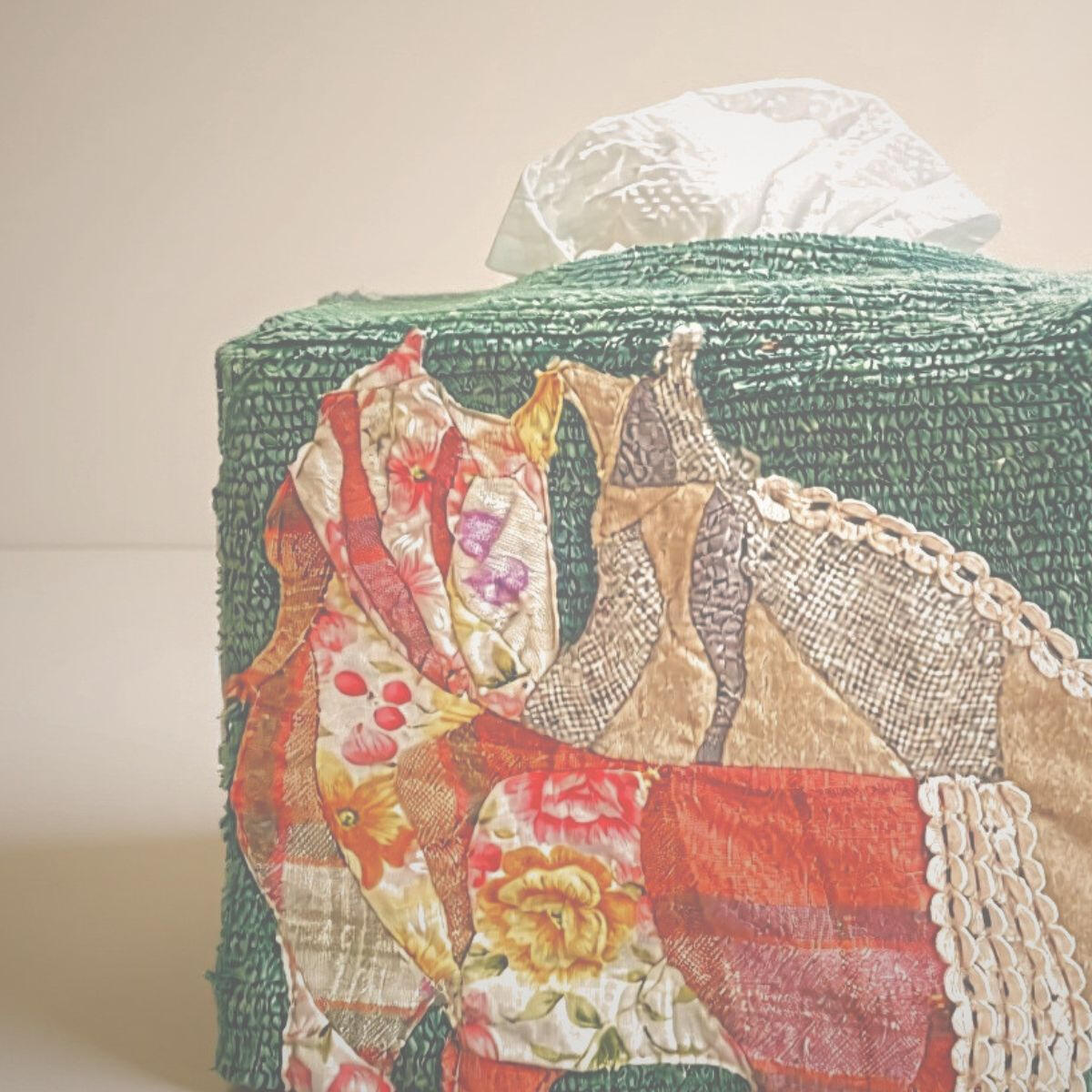
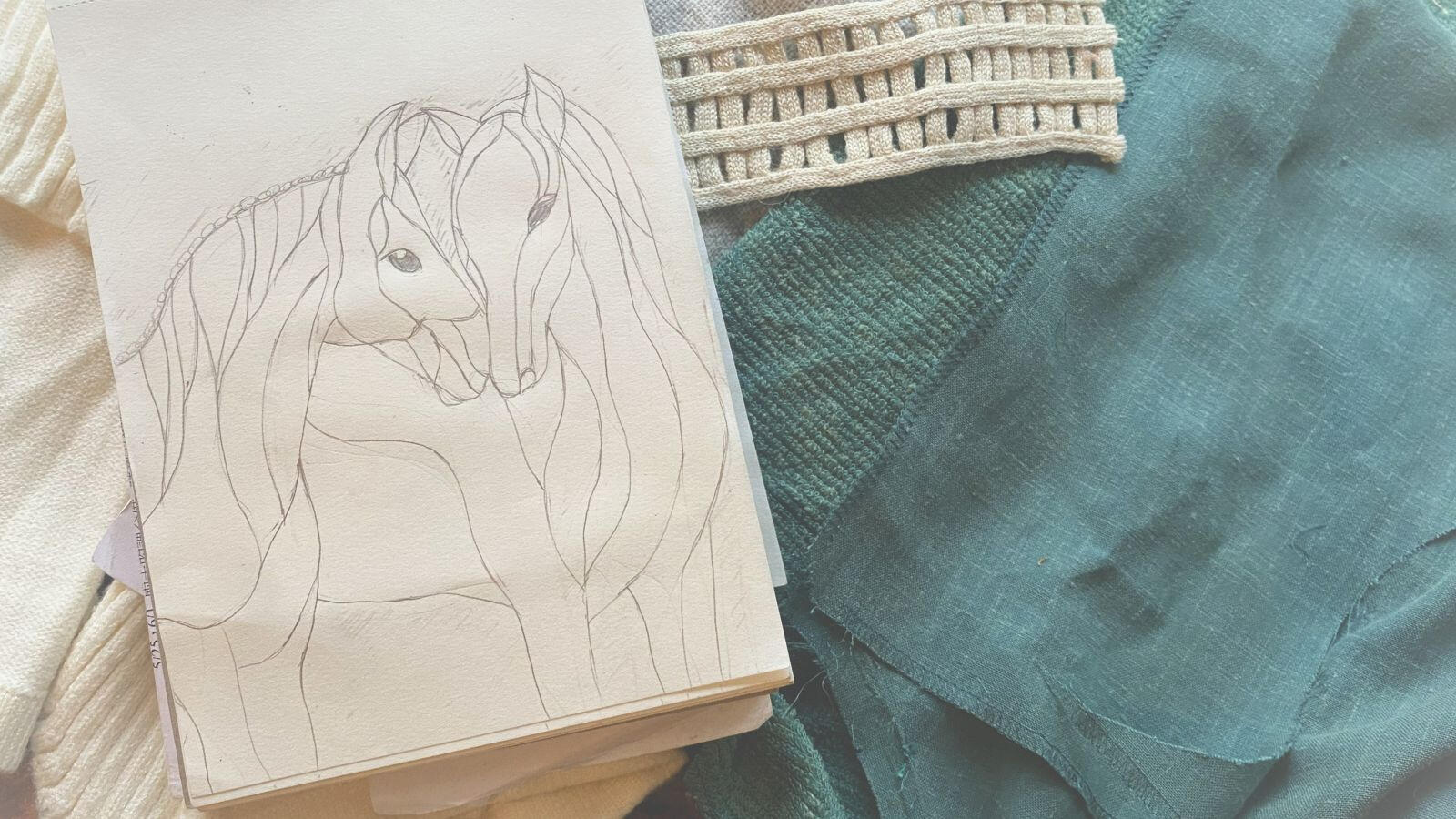
Some things are already here,
waiting to be seen differently.
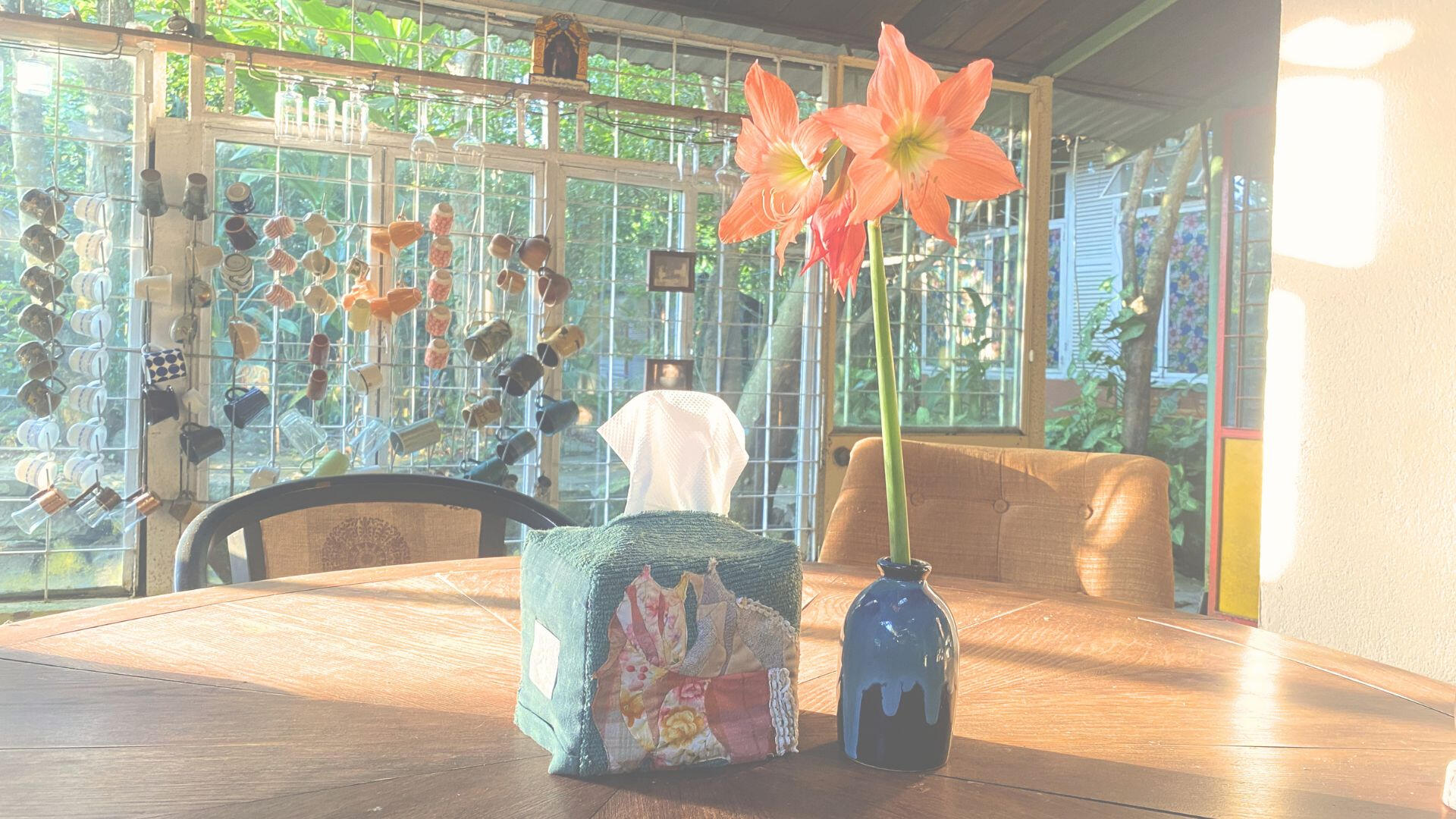
In The Magic Forest, a pair of horses emerged through patchwork.Walking Together
where balance forms
warm reds remain,
but no longer burn.
The circle came first —
not as a shape, but as a quiet knowing.
In this piece, materials that once carried celebration —
traditional Chinese dragon-phoenix and floral prints, alongside orange-red check fabrics from everyday garments.Instead of emphasizing contrast,
the composition allows these materials to settle into a shared field, softening their original cultural and visual intensity.
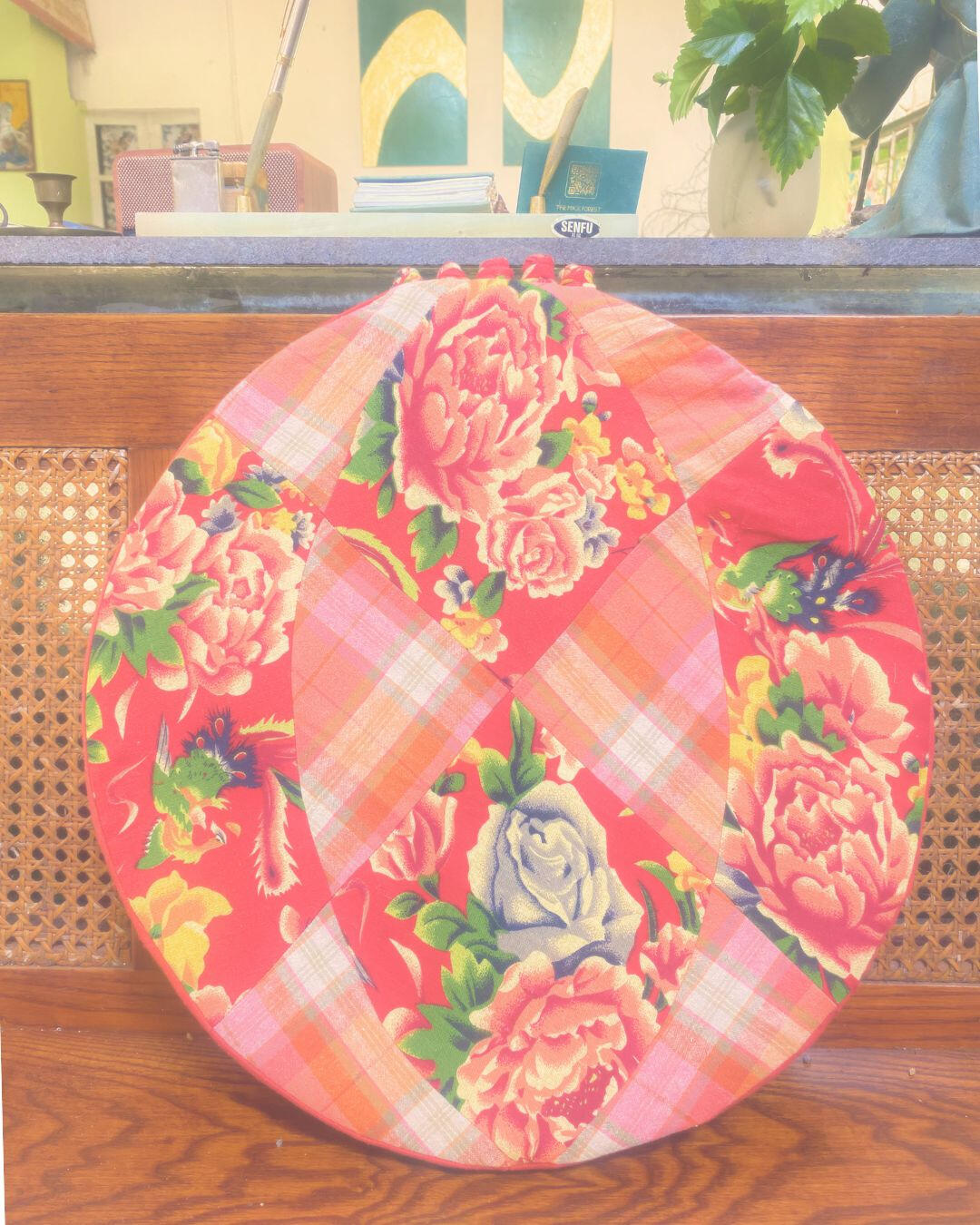
The surface is composed of twenty segments ,
ten on the front and ten mirrored on the back.
Derived from a combination of diamond, isosceles-like triangular, and curved trapezoidal geometries.
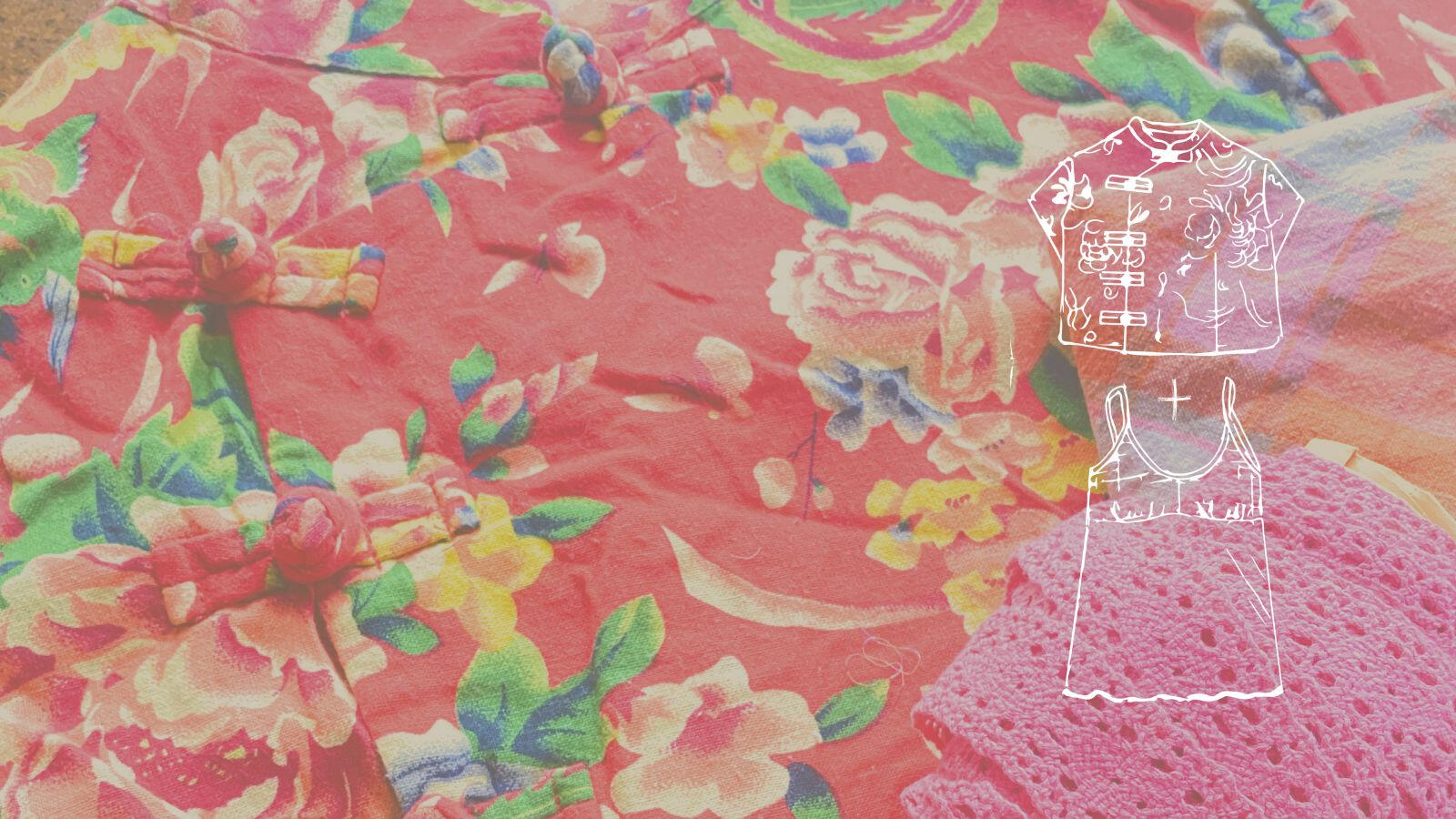
A traditional frog-button closure is retained and repositioned as a structural and visual anchor, making the opening of the piece part of its form logic.
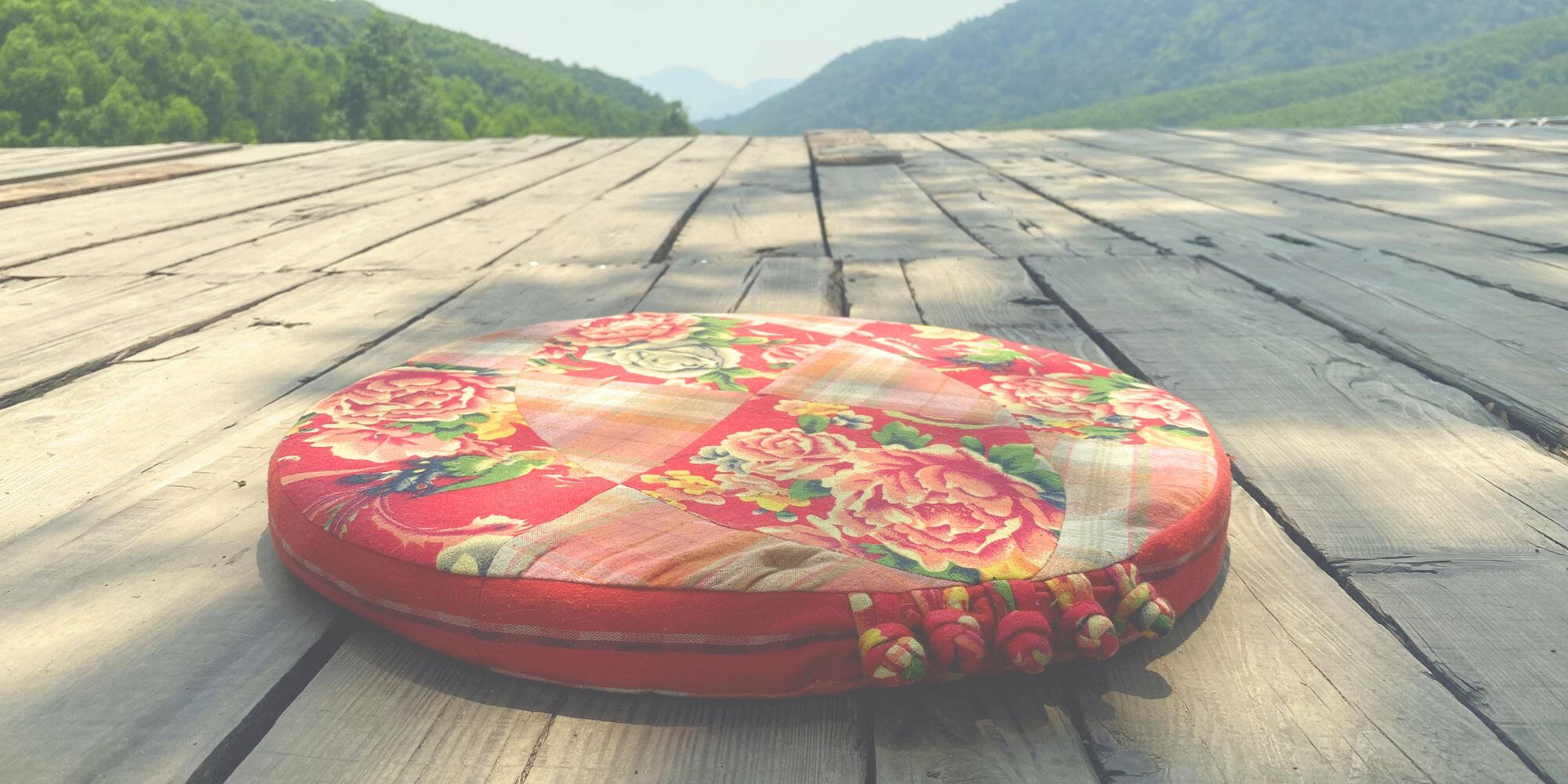
Before movement, there is a place to rest.
Before a story unfolds, something gathers.Where Balance Forms
Genie:
The Weaver
and the Spirit
Wish Fulfillment and Possibility.
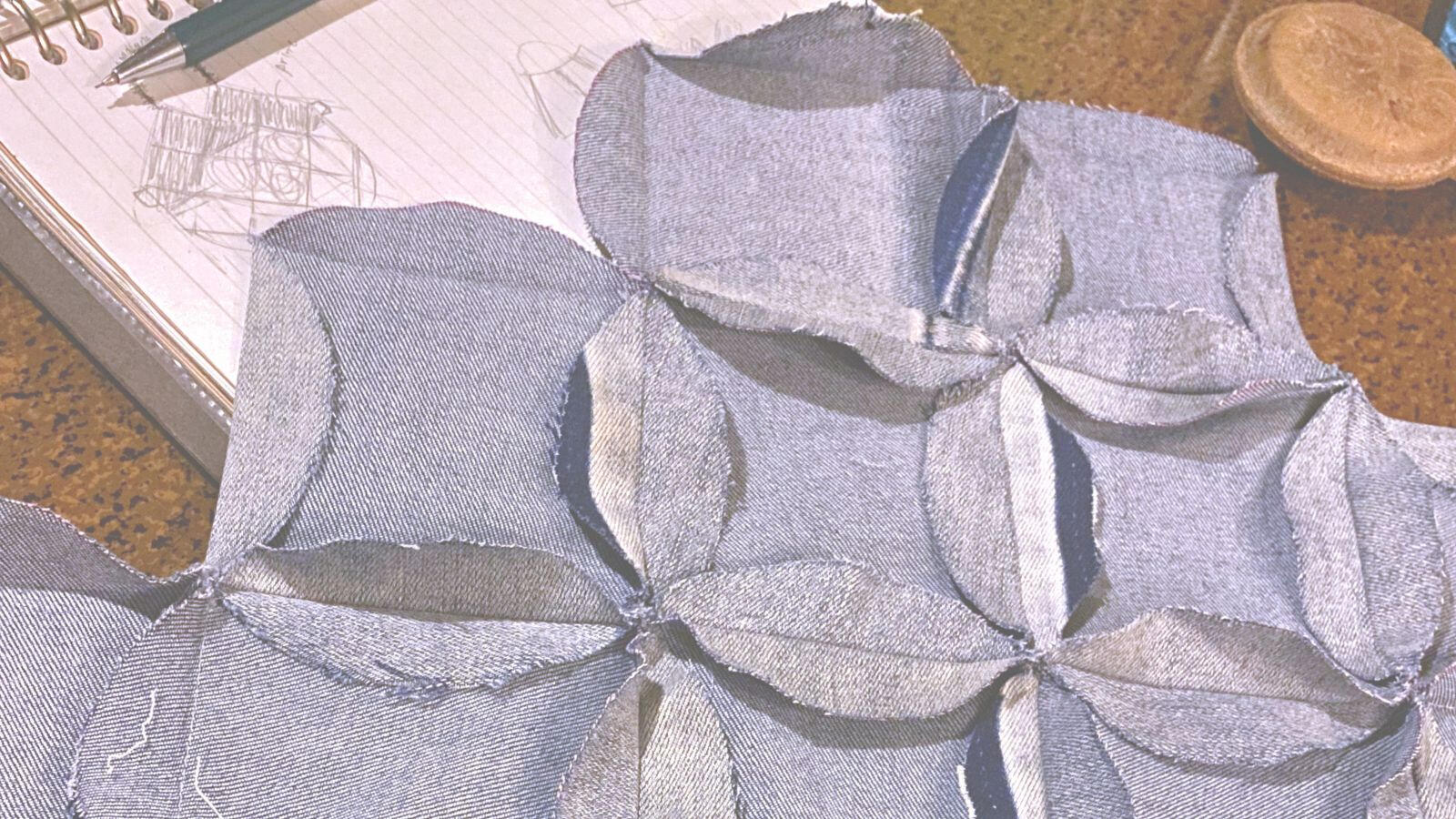
Genie is a modular fashion system built from
29 circular patterns and 29 square patterns.
Using the same pattern pieces, each design can be transformed into different forms, allowing one structure to create multiple identities through folding, joining, and rearrangement.Inspired by sacred geometry and the balance between circle and square, Genie explores the relationship between intuition and craftsmanship, freedom and structure, spirit and material.The collection approaches sustainability as transformation: creating new possibilities from the same forms rather than constantly producing more.Each practice becomes a modern talisman — carrying its own shape, function, and symbolic energy through the ritual of making and wearing.
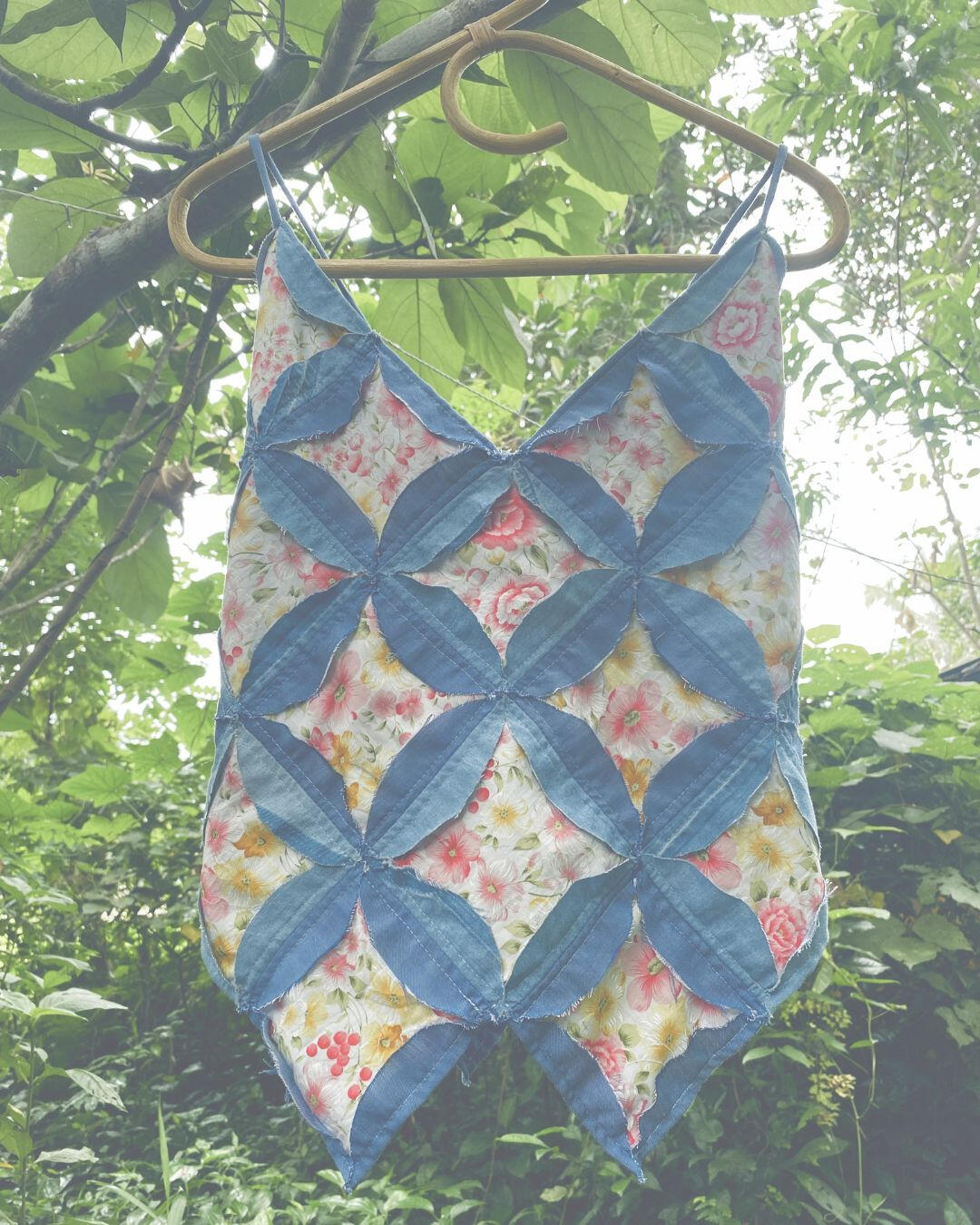
Every piece is designed for reversible use or wear, offering dual ways of carrying, dressing, and experiencing the same form.
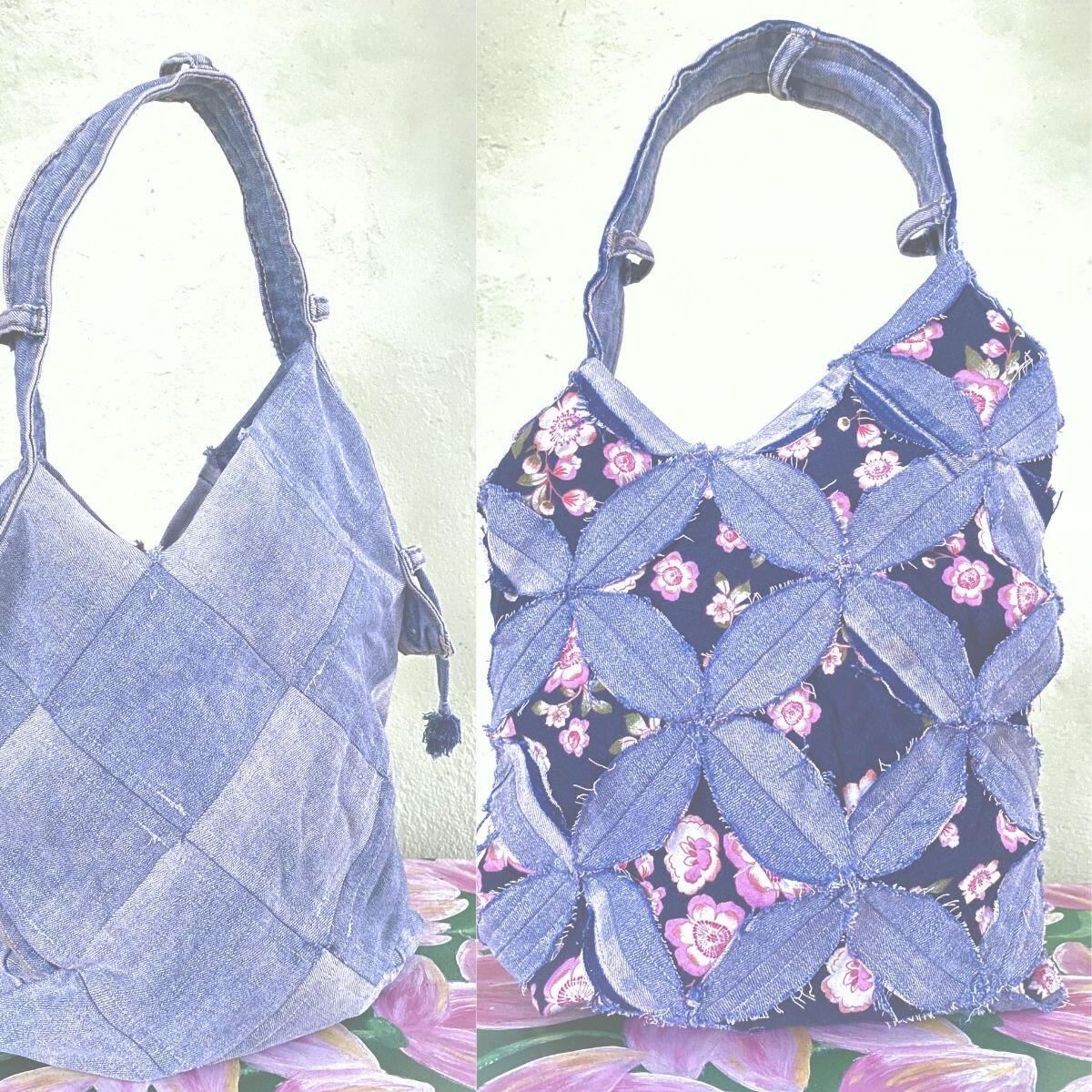
Sustainability, is not a rule but a rhythm.
It is the decision to listen to materials,
to give form without taking more than
we need.
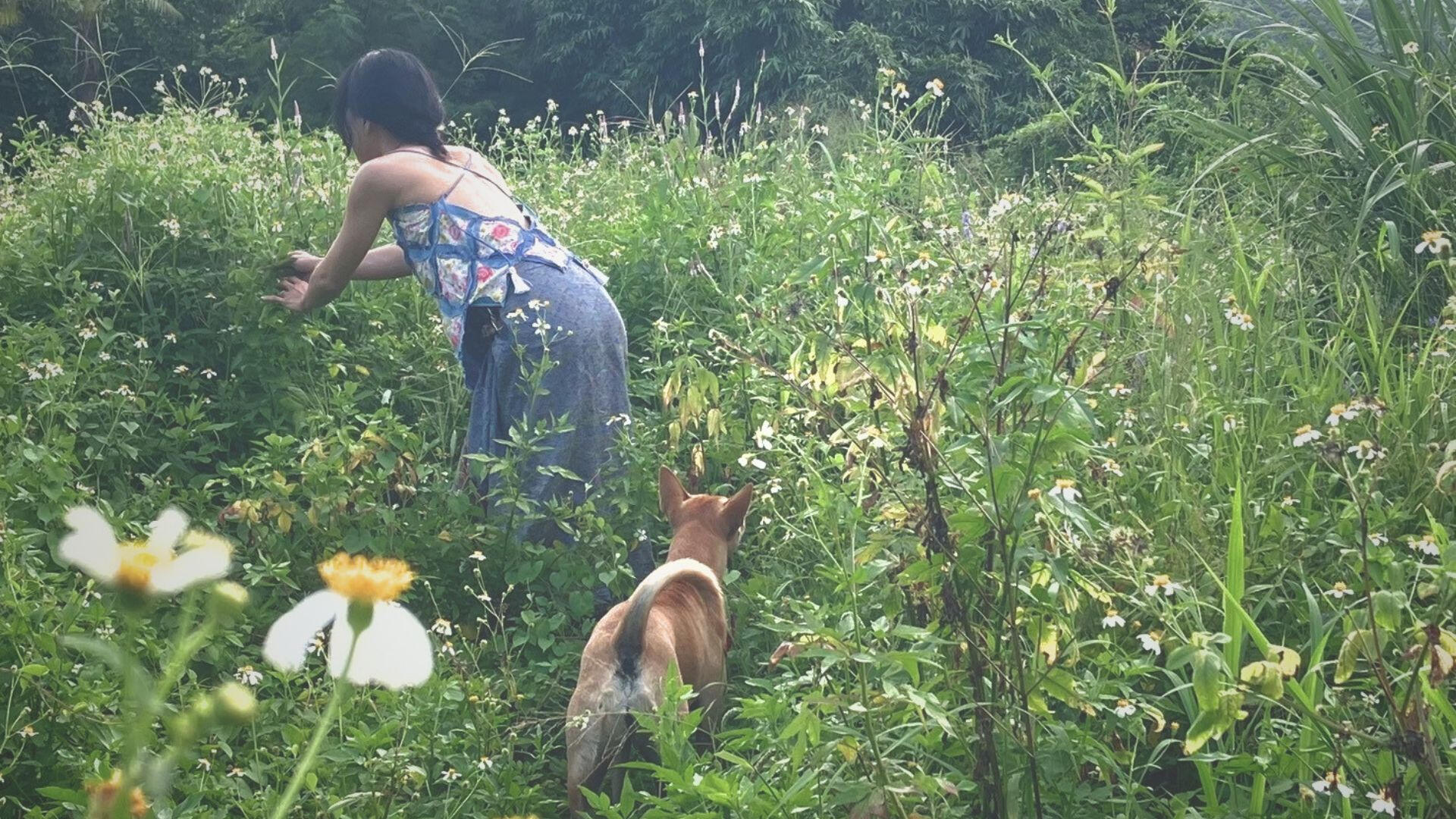
The art of infinity, folded by hand.Genie: the Weaver and the Spirit
who's uniform
a practice of garments through global circulation, and how identity shifts as materials travel.somewhere between wearing and being worn, between ownership and anonymity,
the question remains:
Who am I,
and where am I going?
It began with an image in a newspaper.
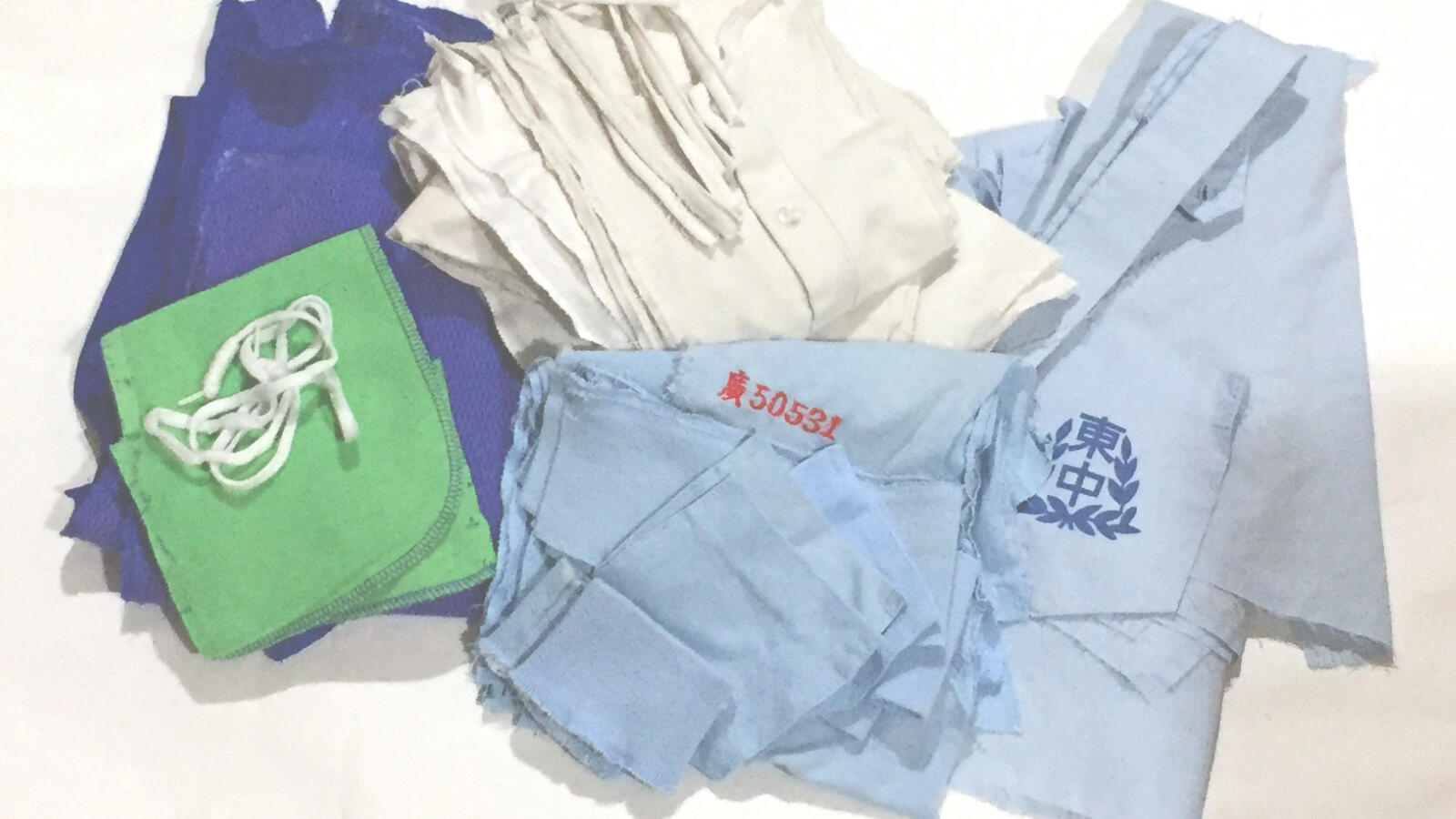
An Emirati man wearing a Taiwanese high school uniform.The garment had traveled.
But something remained, a name, a system, a place it once belonged to.This raised a series of questions:
- Which countries receive the most second-hand clothing?
- What happens to garments once they leave their original context?
- What remains when identity is separated from the body that first wore it?The school uniform carries a specific structure, it assigns belonging, discipline, and identity.When relocated across cultures,
it becomes something else.
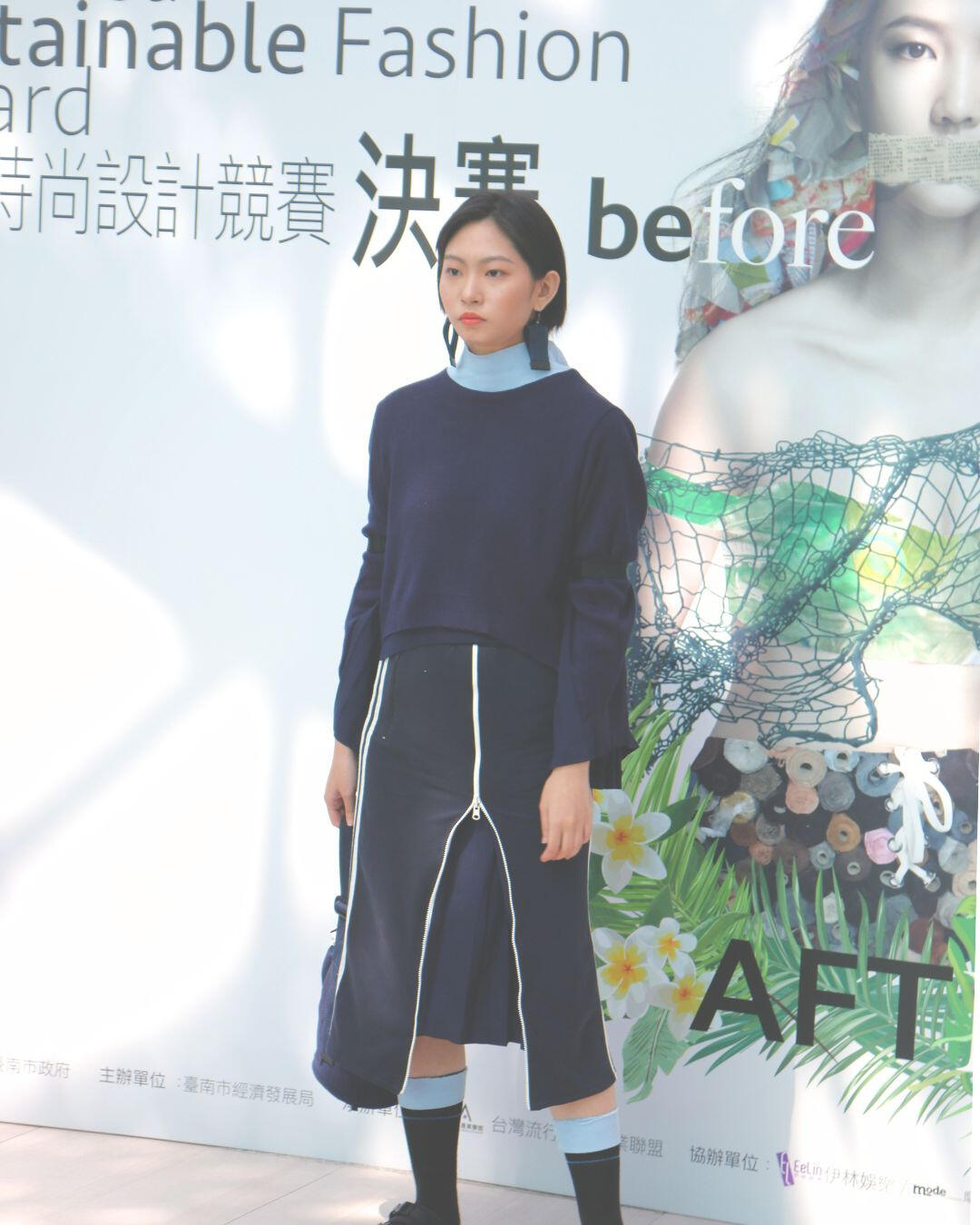
Formosa Sustainable Fashion Award, 2019
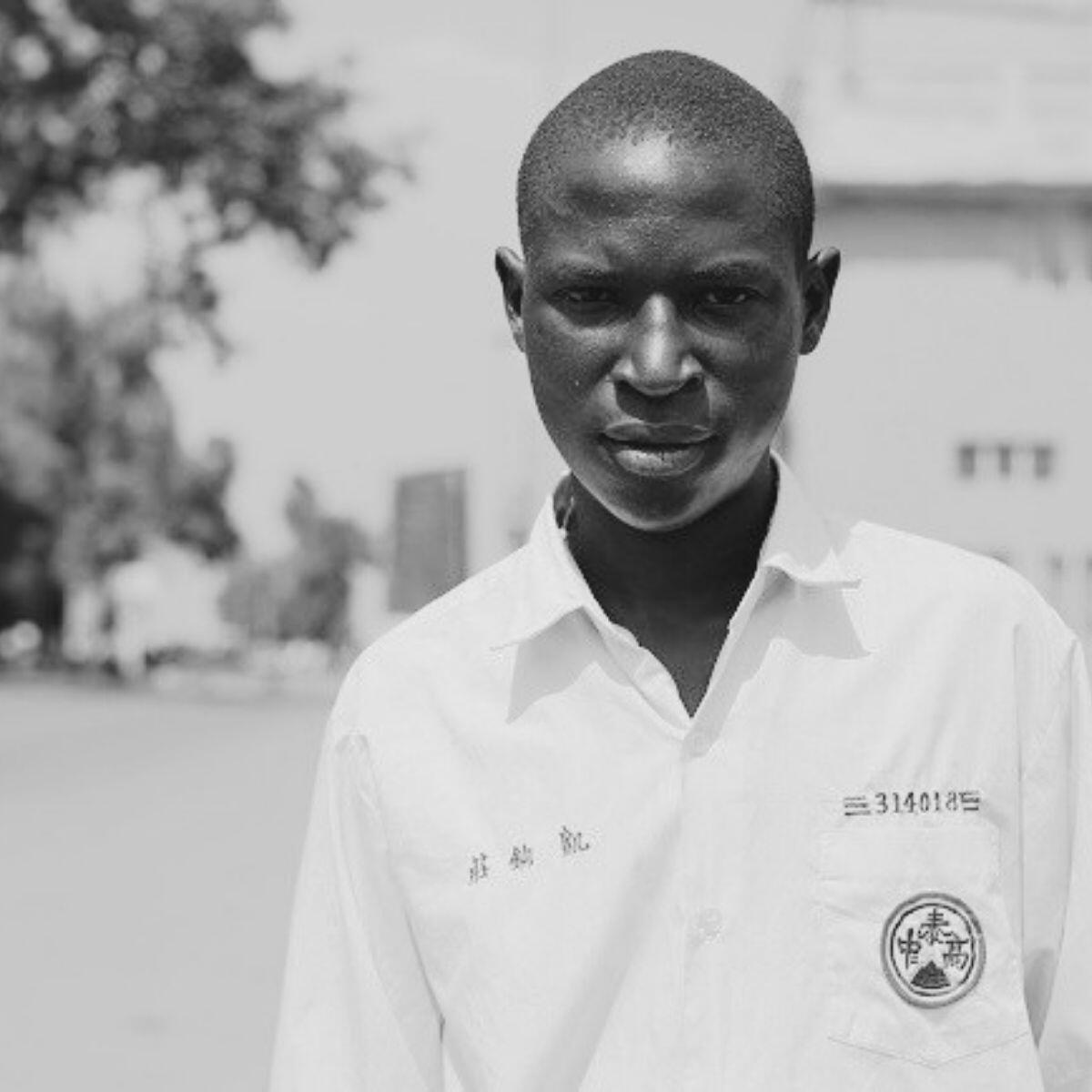
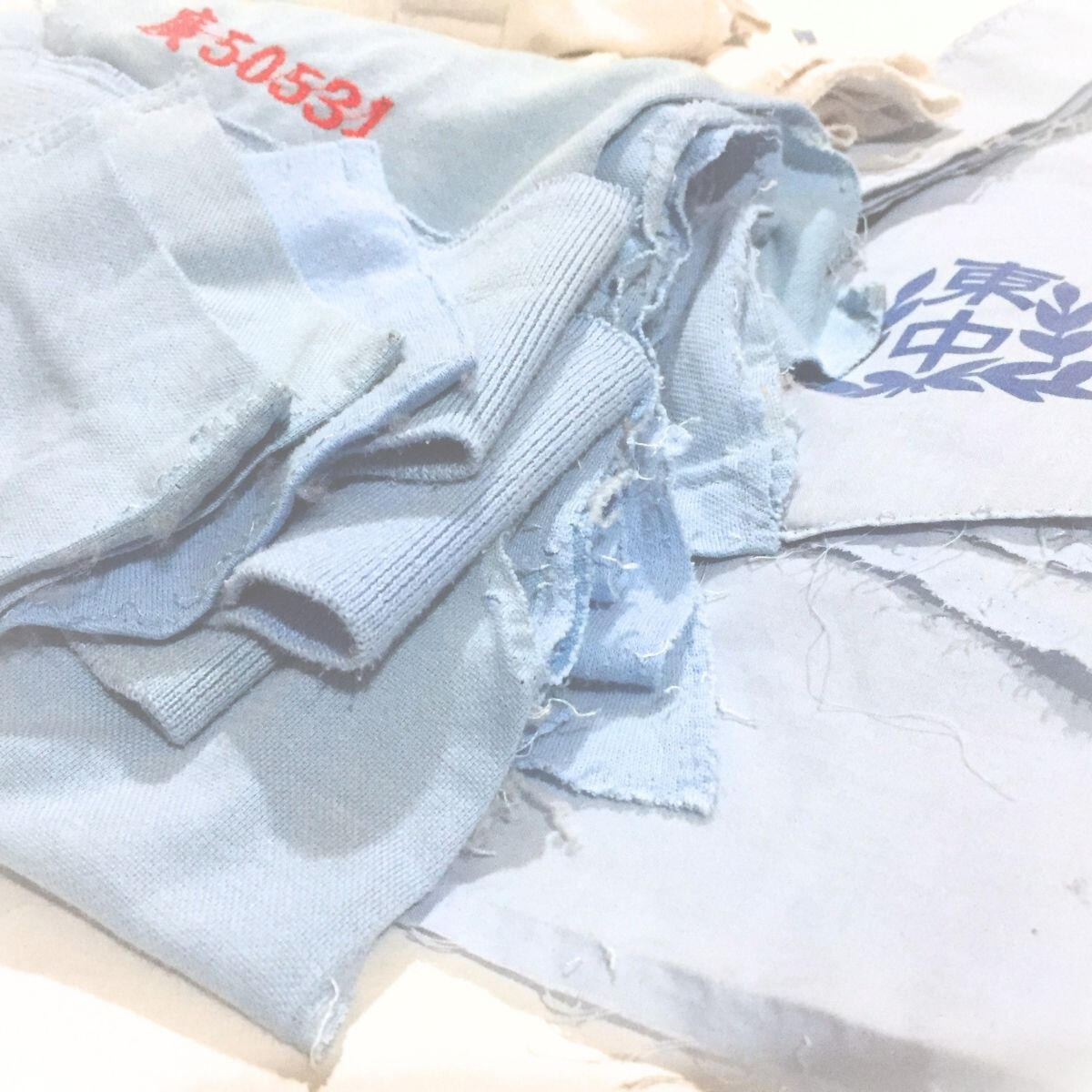
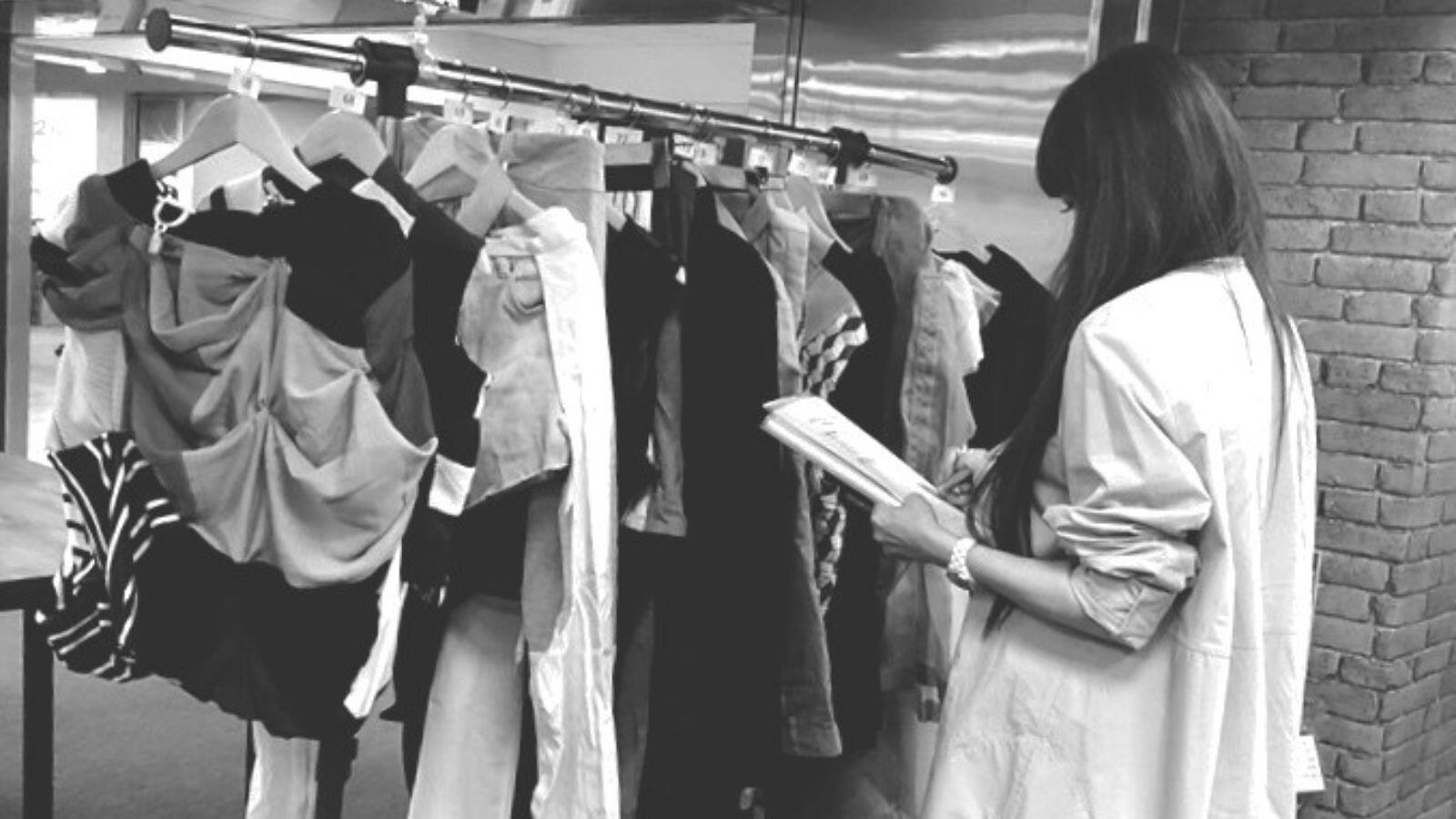
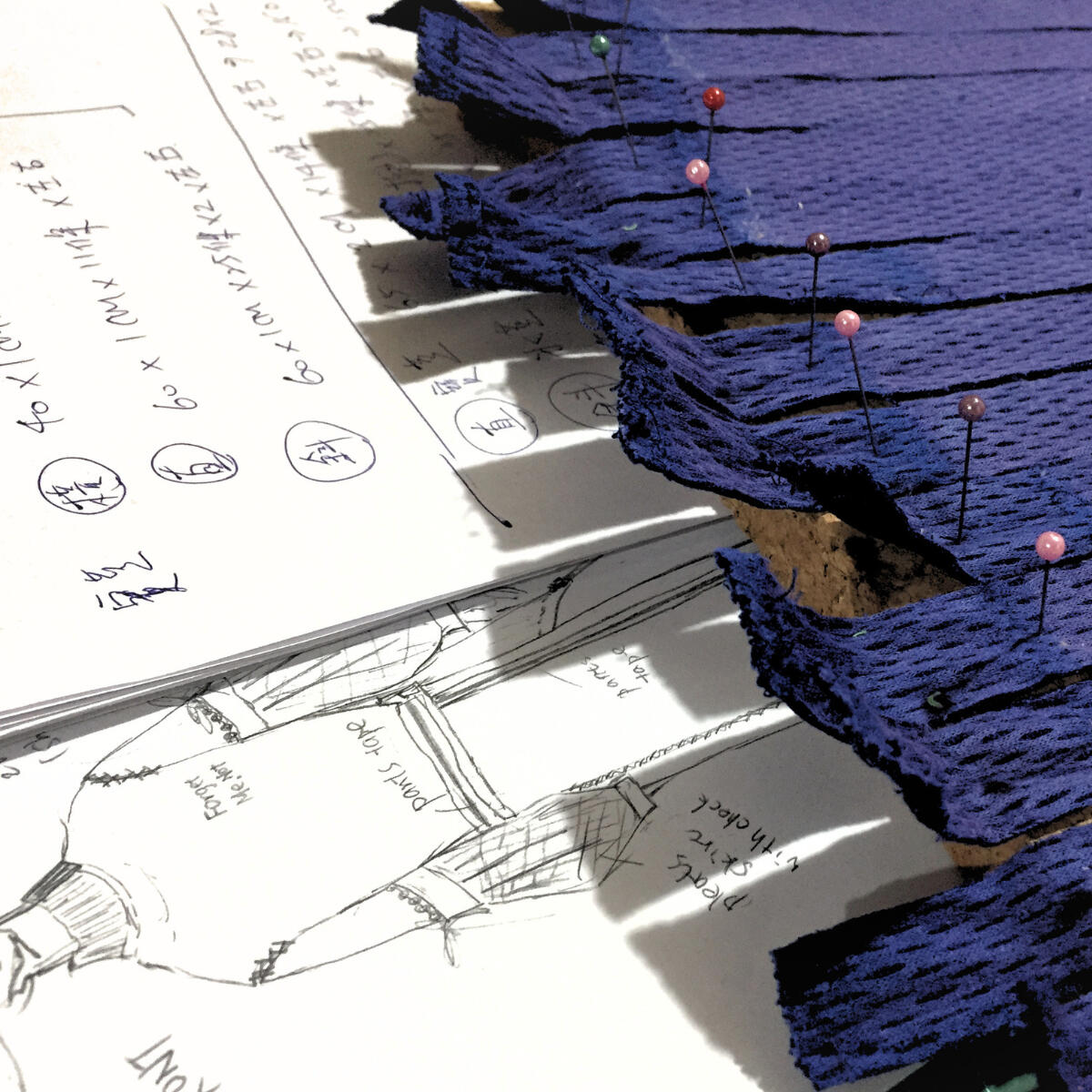
Using discarded Taiwanese school uniforms, sportswear, backpacks, and student accessories, the collection reconstructs familiar symbols of education into adaptable garments.Reversible constructions, transformable silhouettes, and reconfigured materials reflect the changing identities.Garments acquire through use, exchange, and migration.
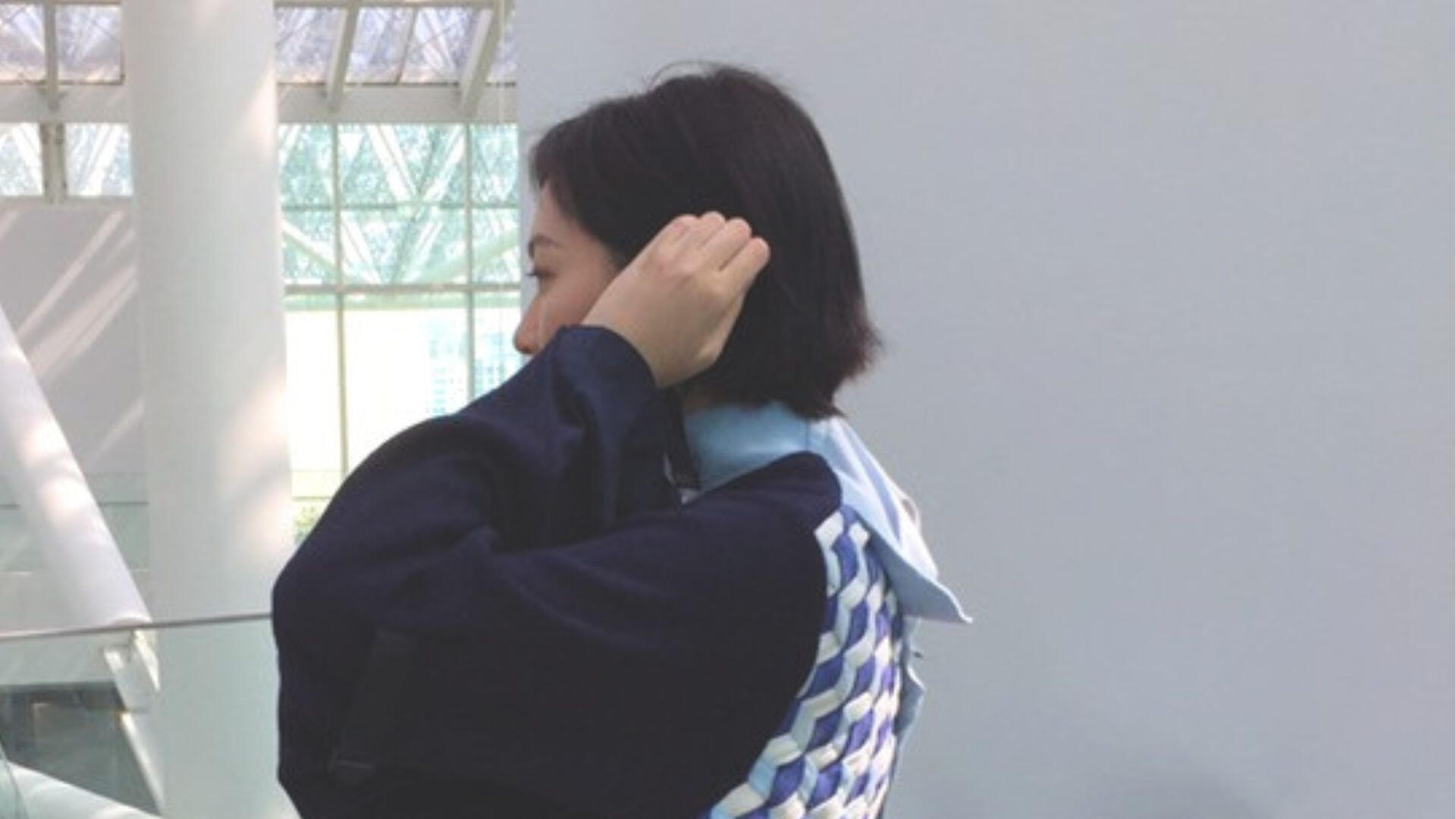
I prefer being an ethical buyer.who's uniform
Installation
sky, earth, forest
rather than forcing materials into predetermined outcomes, the process
follows tension, rhythm, softness, and possibility already present within the fabric.
Materials are gathered first.Forgotten garments,
industrial leftovers,
surfaces already carrying time.Through adjustment,
pressing,
cutting,
and listening,
new relationships emerge.
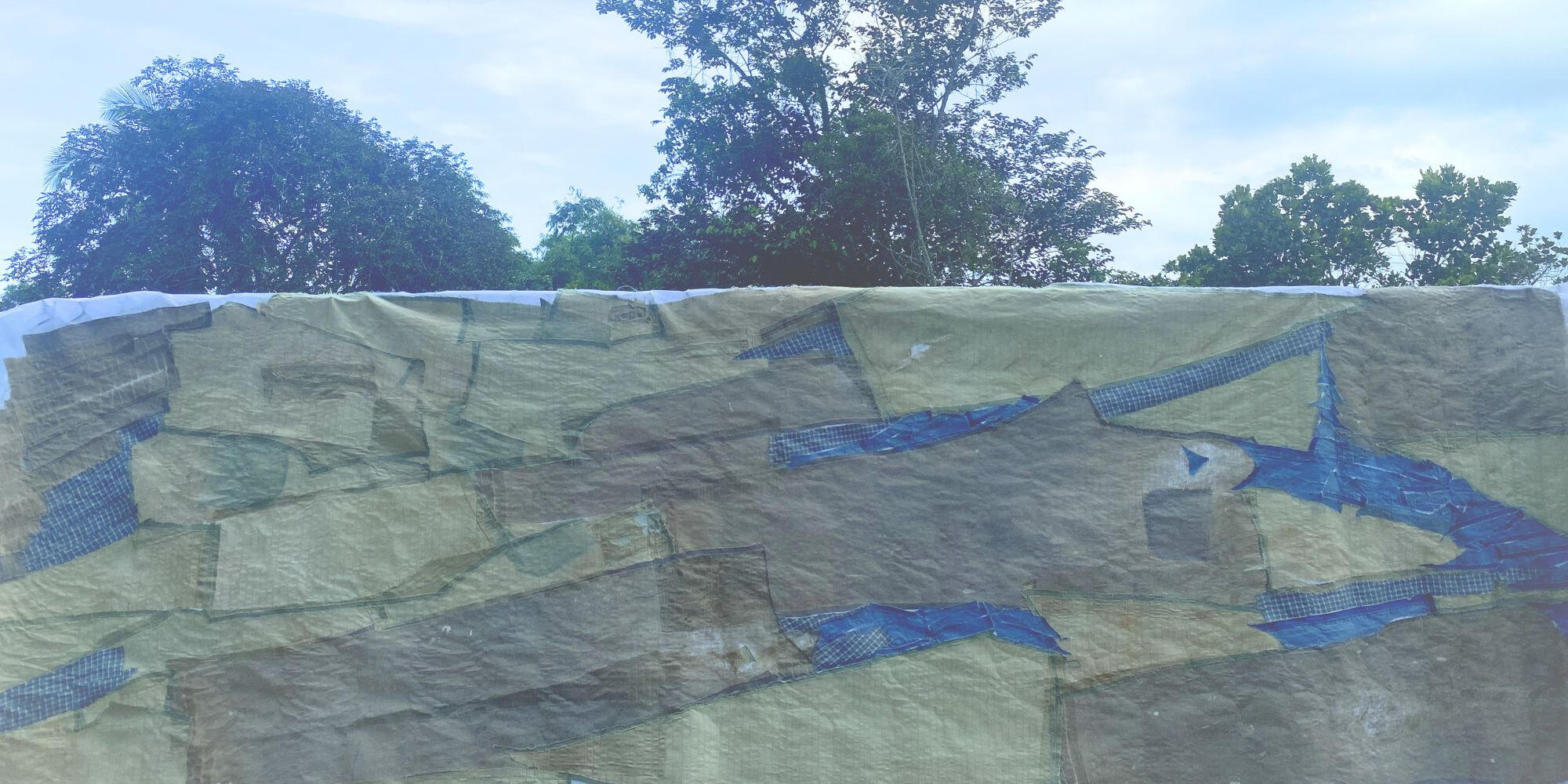
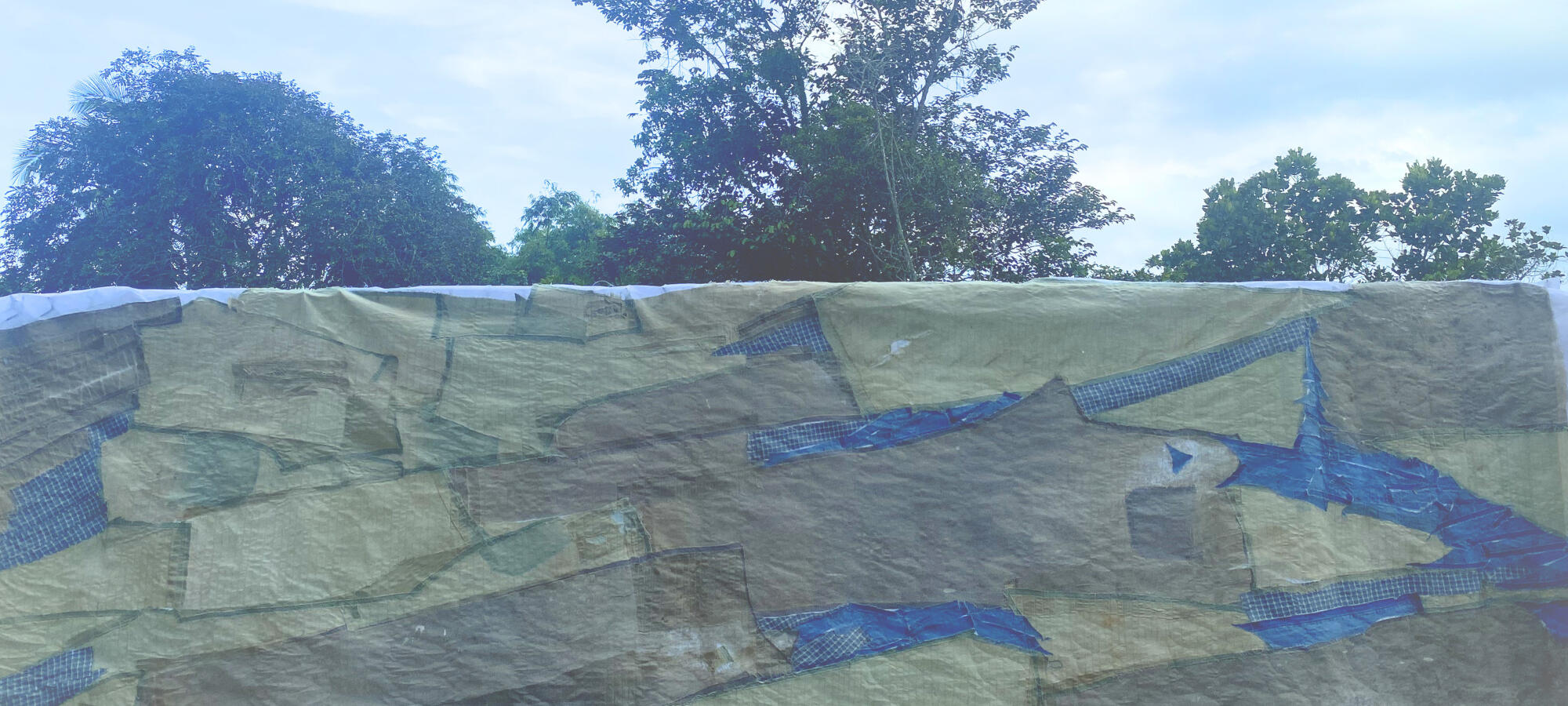
Sky is constructed from three second-hand garments.The composition prioritises preserving the largest possible textile surfaces, allowing signs of wear, abrasion, and aging to remain intact.Rather than fragmenting material into smaller pieces, the work seeks continuity, maintaining a connection to each garment’s previous life.Through suspension and spatial installation,
the textile shifts between object, surface,
and temporary architecture.
Three worn garments recomposed through large-scale textile preservation, allowing abrasion, fading, and traces of long-term
wear to remain visible.
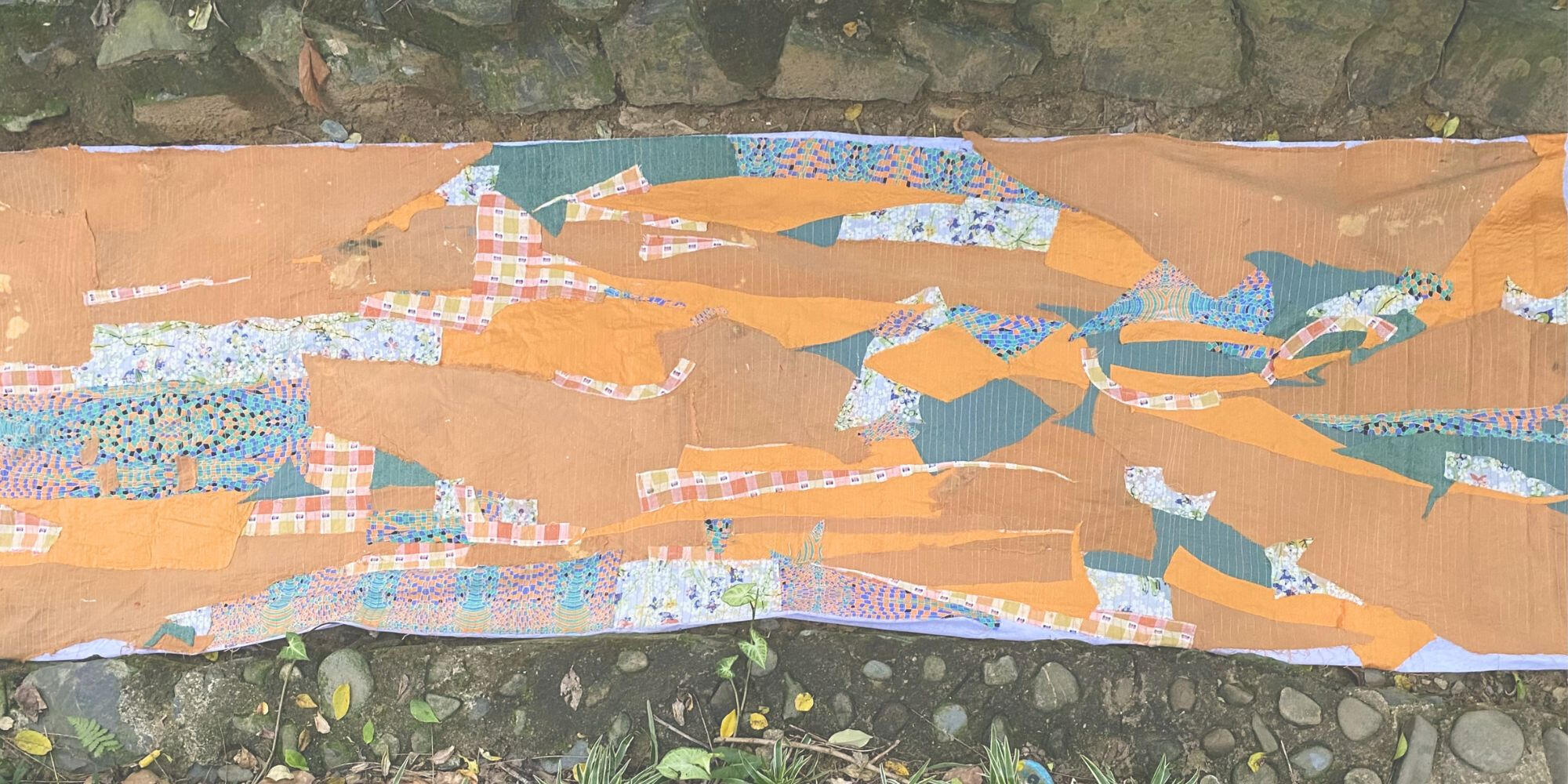
Earth expands the reconstruction process through greater material diversity.Built from five discarded garments, the work combines unrelated textiles, prints, weights,
and surface qualities.Contrasts are intentionally preserved rather than resolved, creating new relationships between materials that were never originally intended
to coexist.The resulting composition reflects accumulation, unpredictability, and the layered complexity of
textile waste streams.
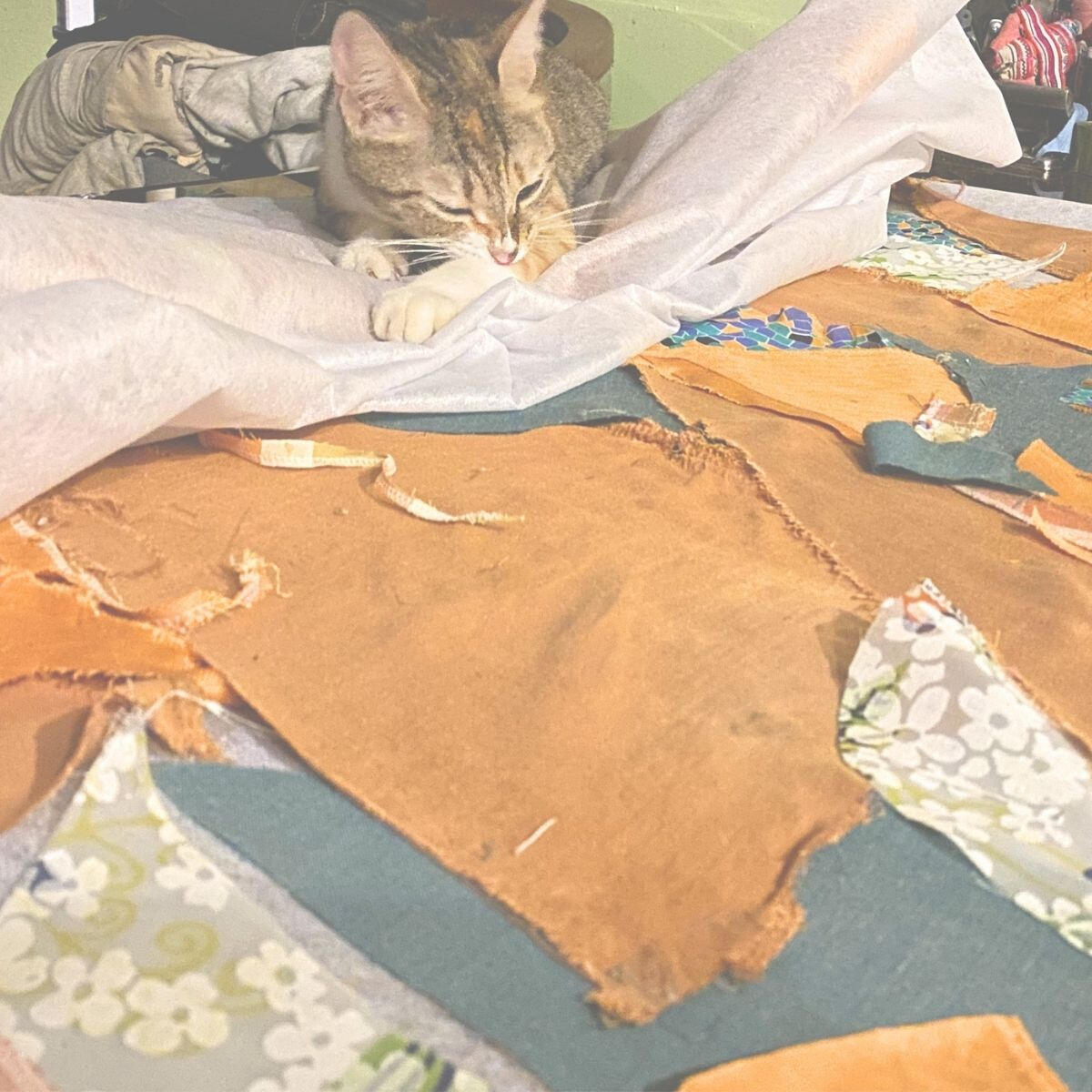
Multiple discarded garments assembled through textural contrast, print collision,
and irregular material relationships.
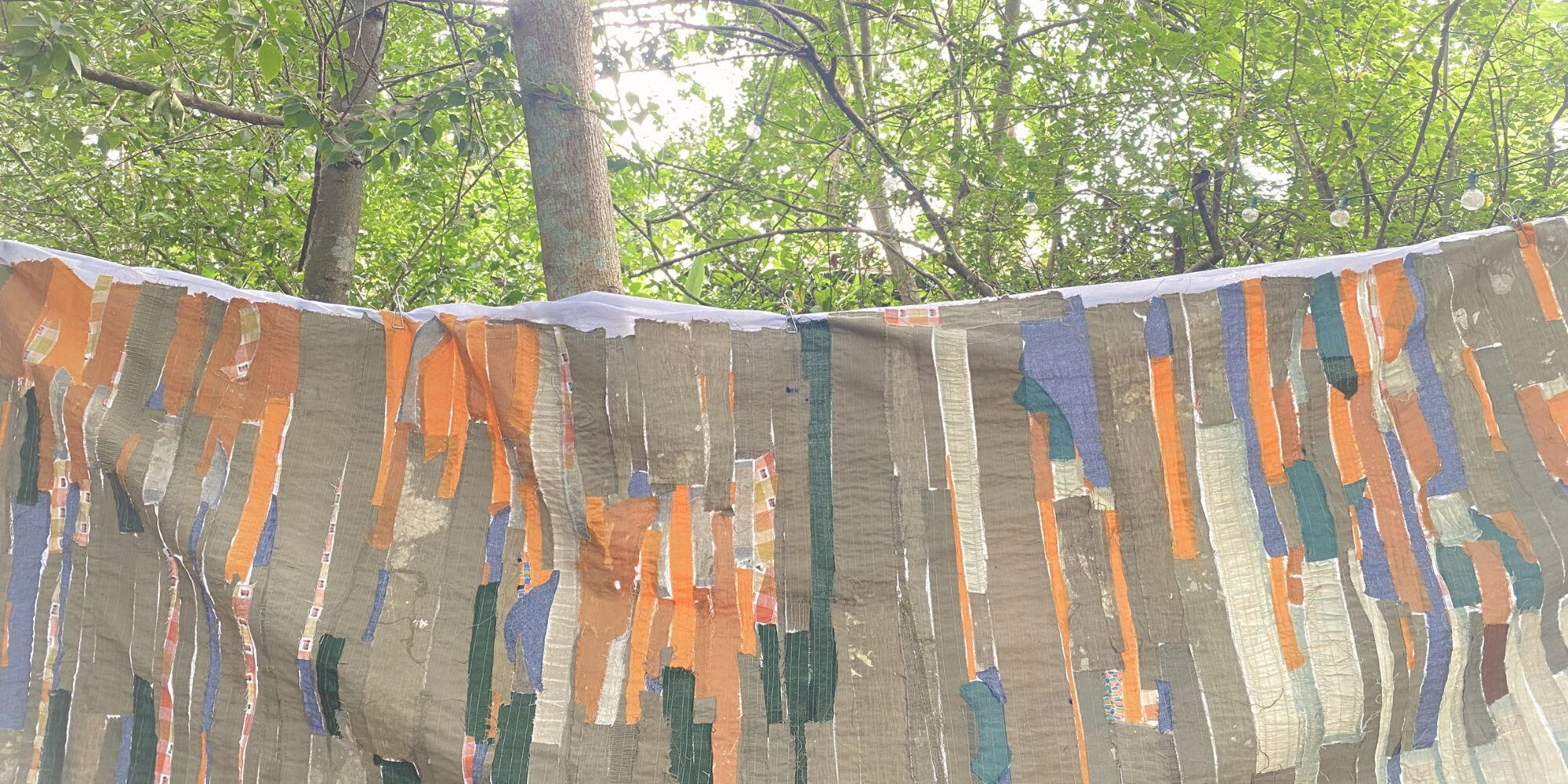
Forest brings together materials originating from both Sky and Earth through a strip-based construction method.Fragments are layered, connected, and accumulated into the densest textile structure within the series.The work contains the greatest number of garments and the widest range of material histories.Through repetition and aggregation, individual identities gradually dissolve into a collective textile landscape that continues to evolve through installation and movement.
Constructed through layered textile strips, merging materials from Sky and Earth into the largest collective garment composition within the series.
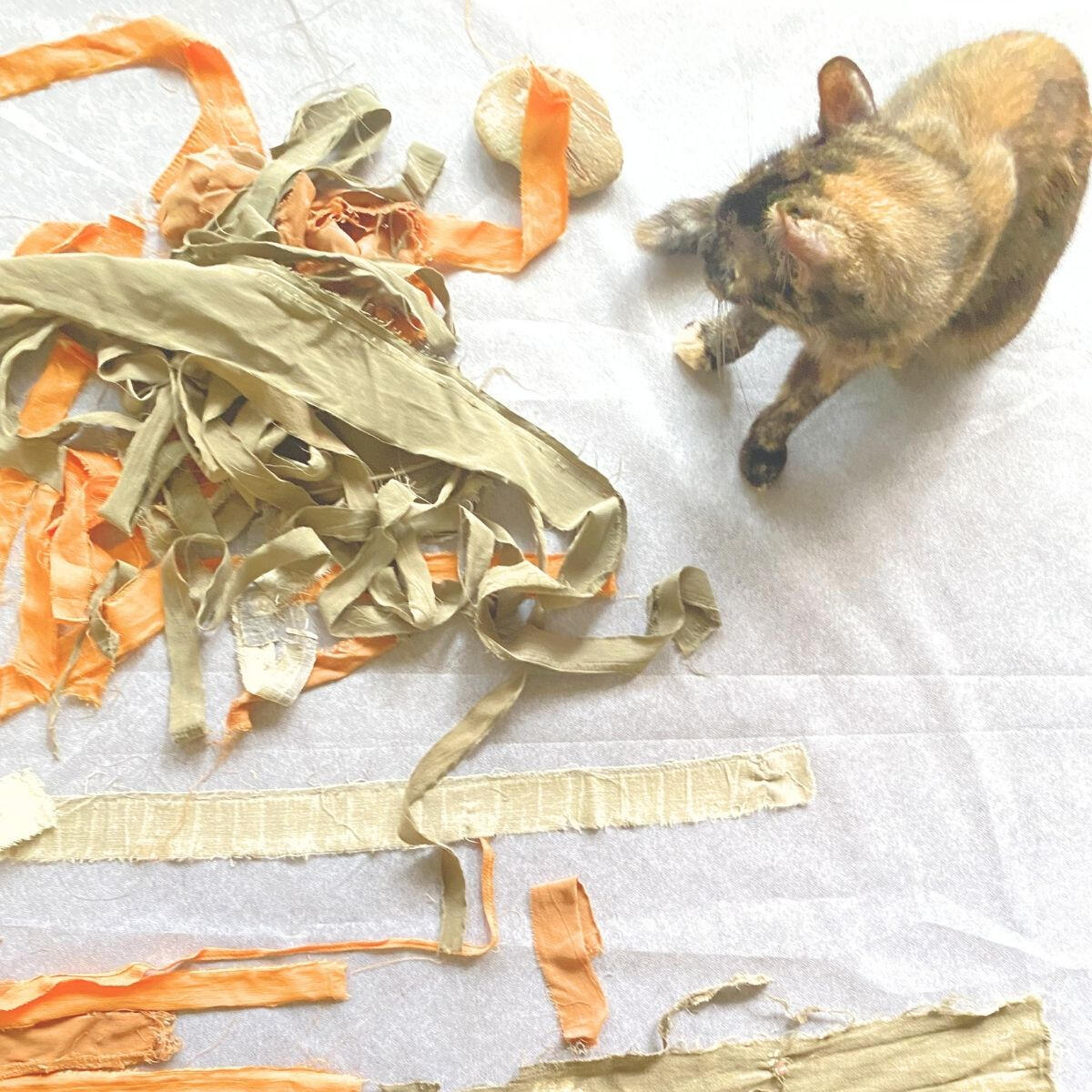
Suspended from the ceiling,
the works shift between garment, textile, and spatial structure, allowing material histories to be experienced beyond the body.
Material Notes
Fragments of research, experiments,
and material studies within HorngWave.
Archive
Ongoing research in material practice, garments, and transformation.
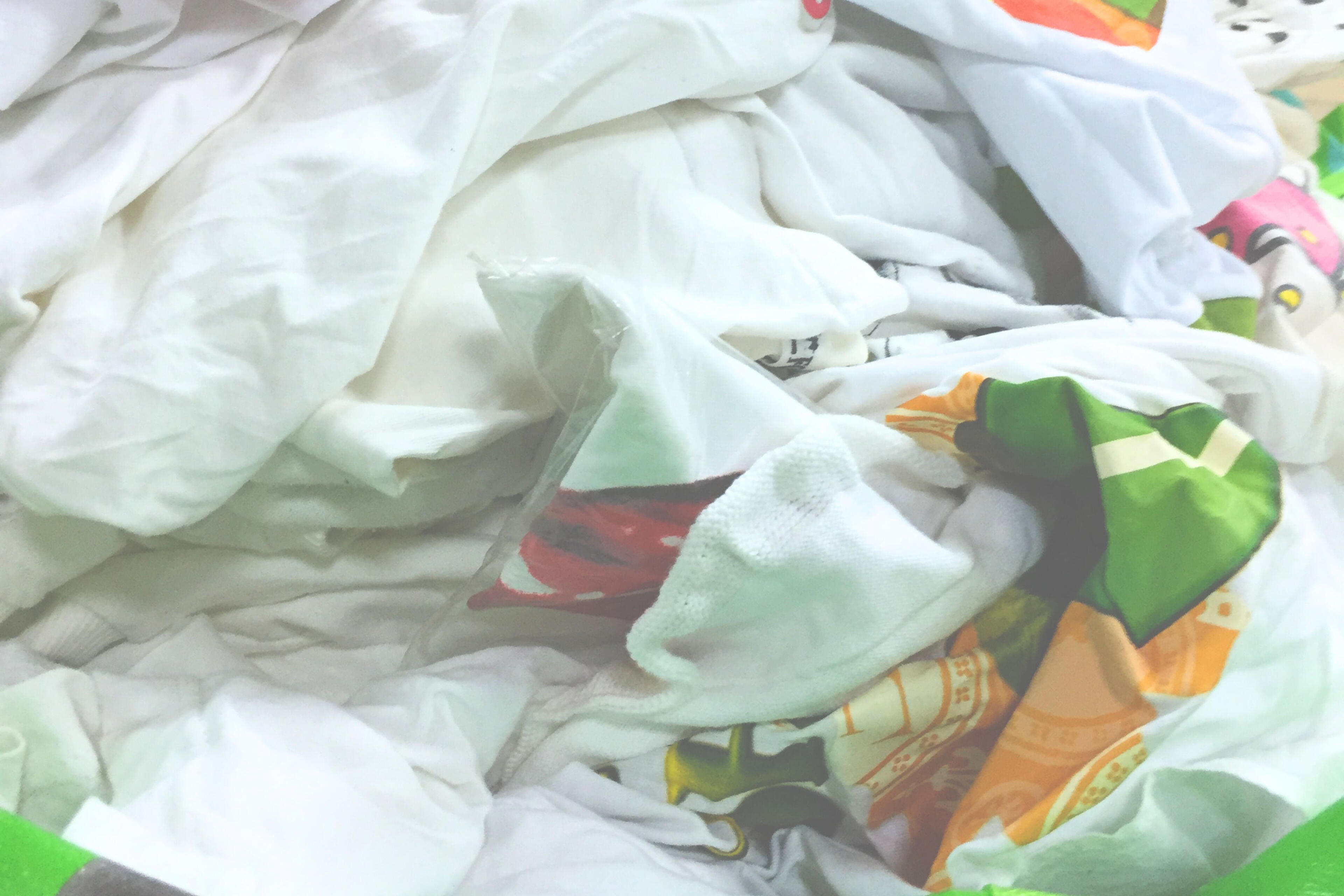
No.01 - The White T-Shirt Experiment (2018)a study of collection, sorting, and the limits of textile recycling.
A public collection was organised in Taiwan.
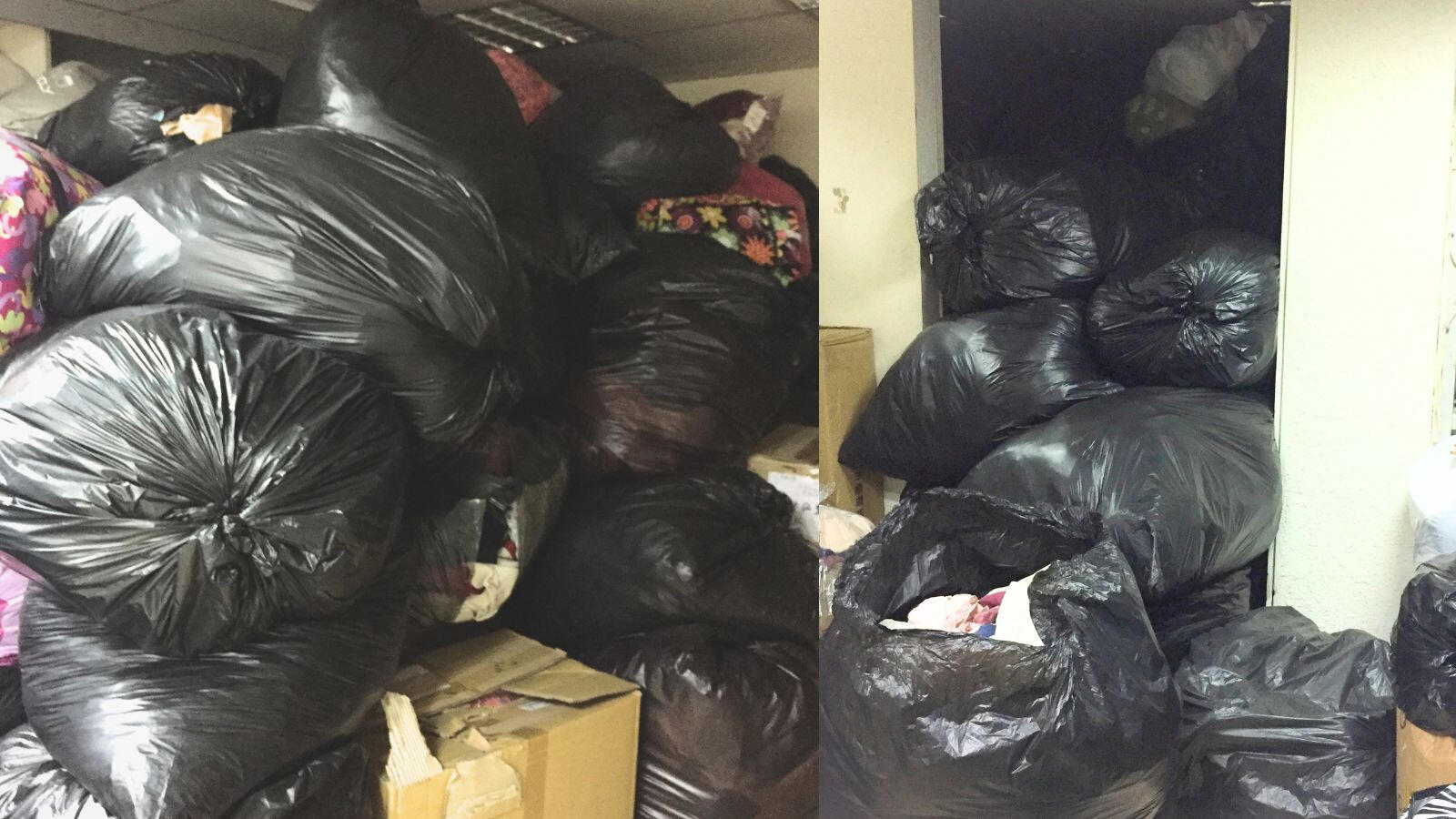
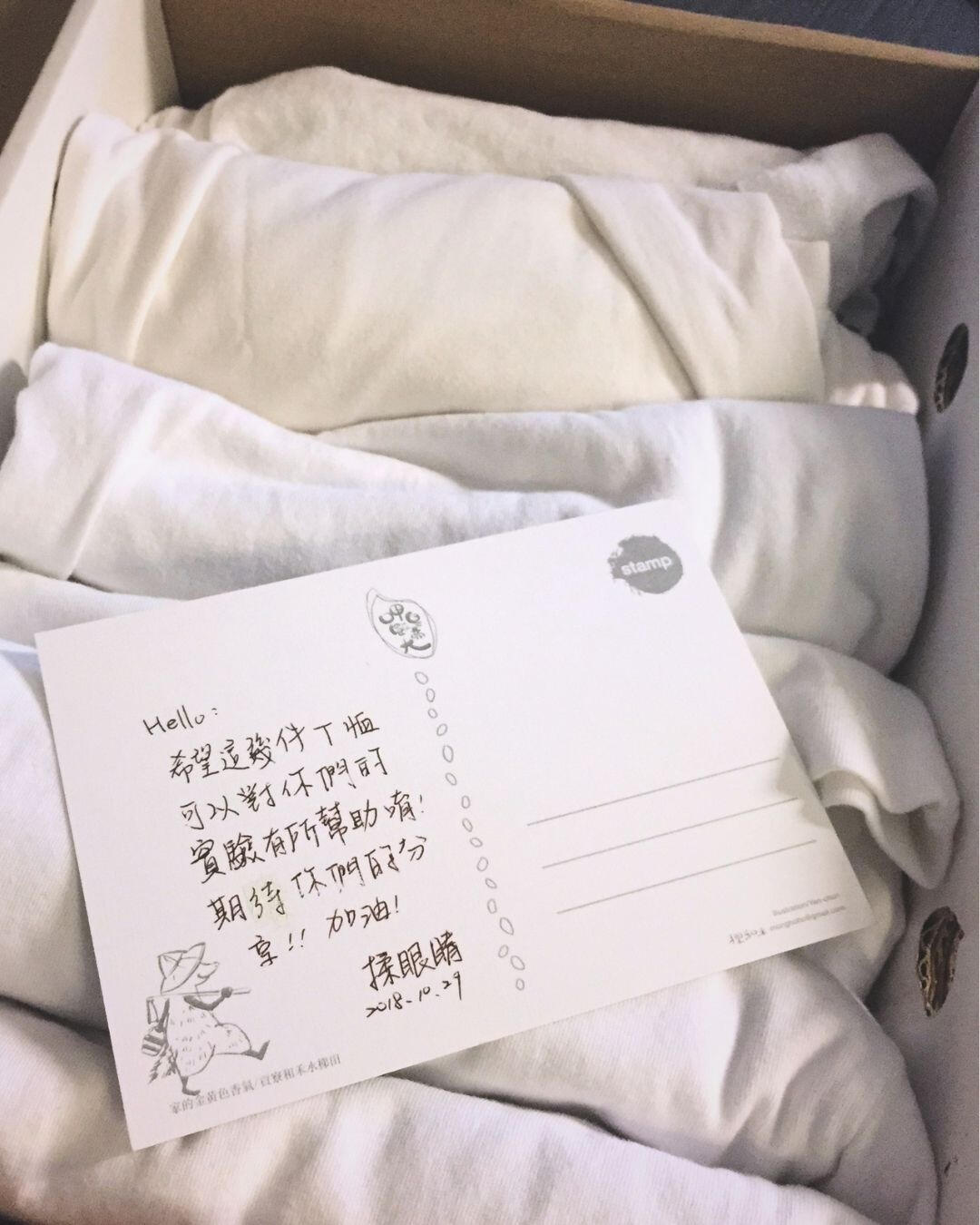
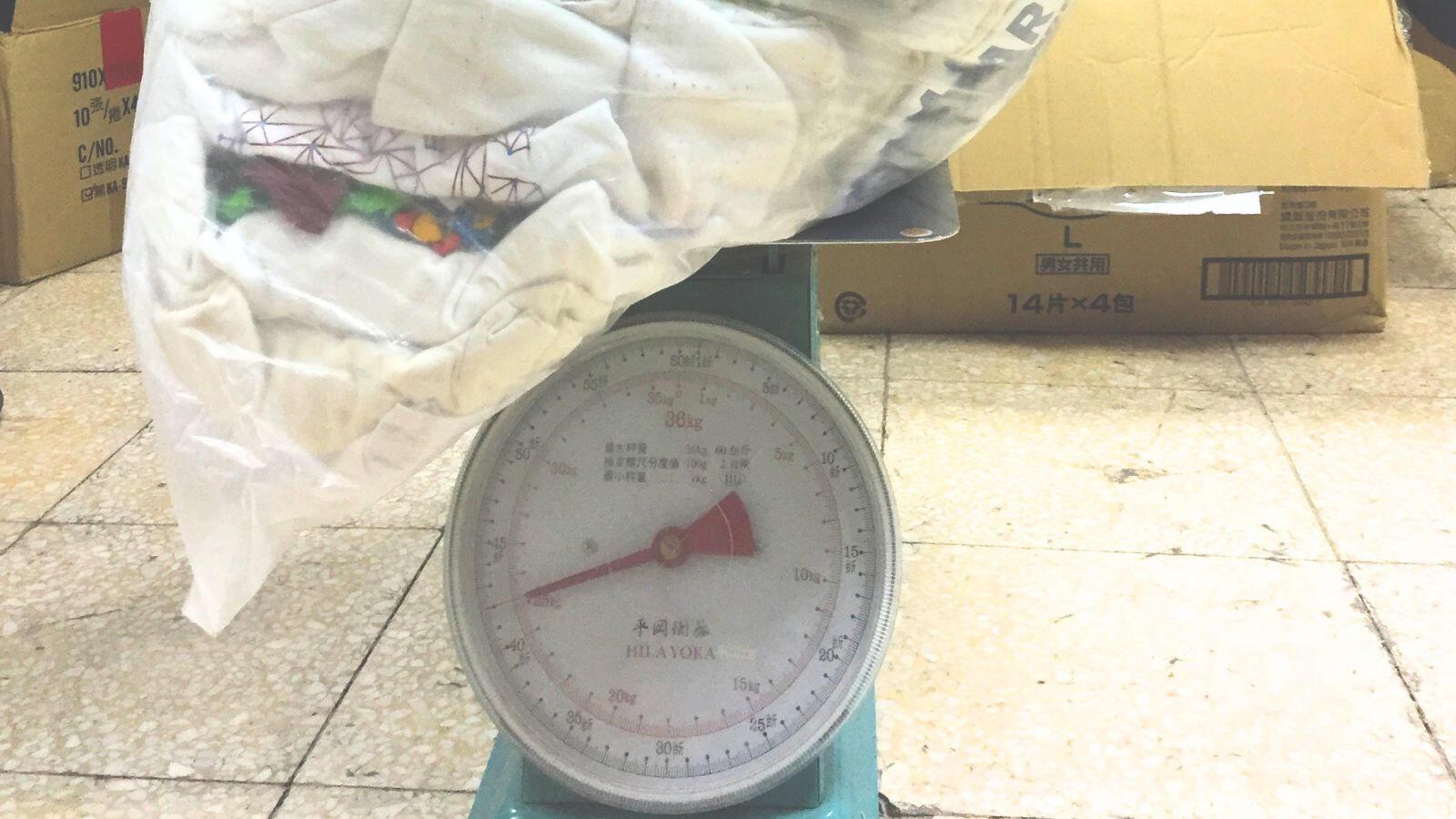
Within a short time, around 45 kilograms of garments were gathered, accompanied by handwritten notes and messages of encouragement.
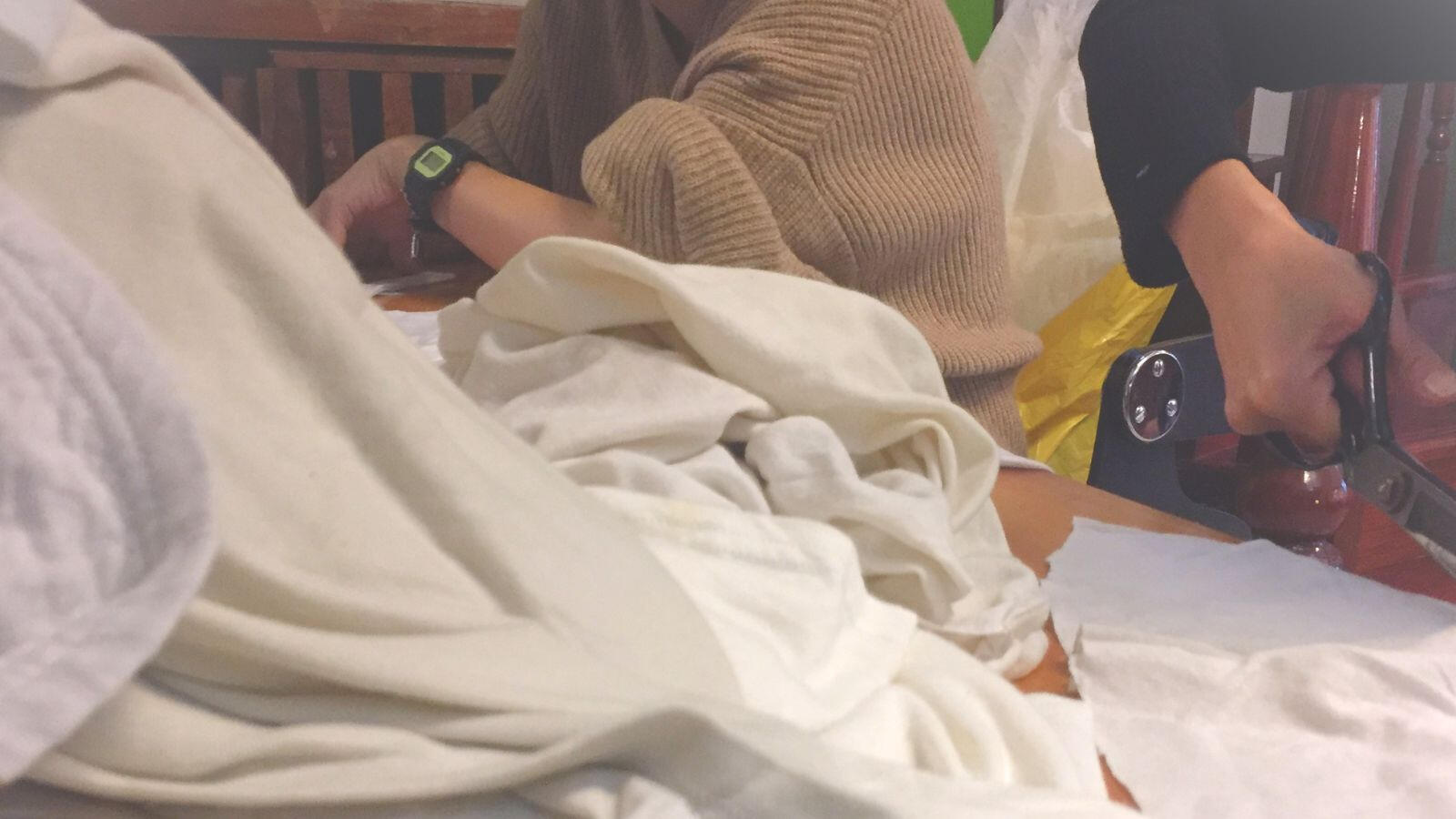
Inside the studio, every garment had to be examined by hand.
Labels, synthetic blends, and mixed materials were separated.
It became clear that only a portion of the collected garments were suitable for textile recycling.
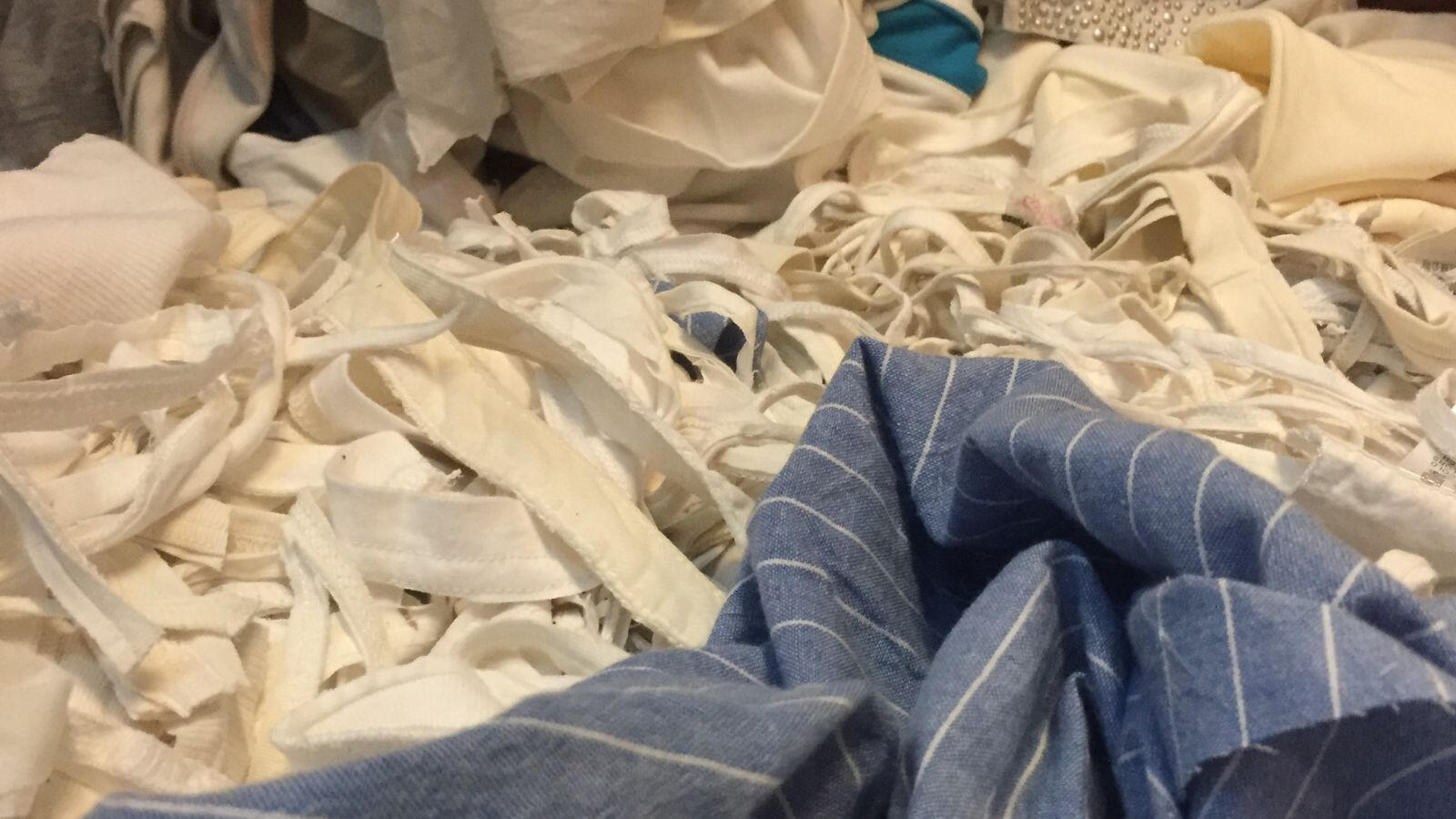
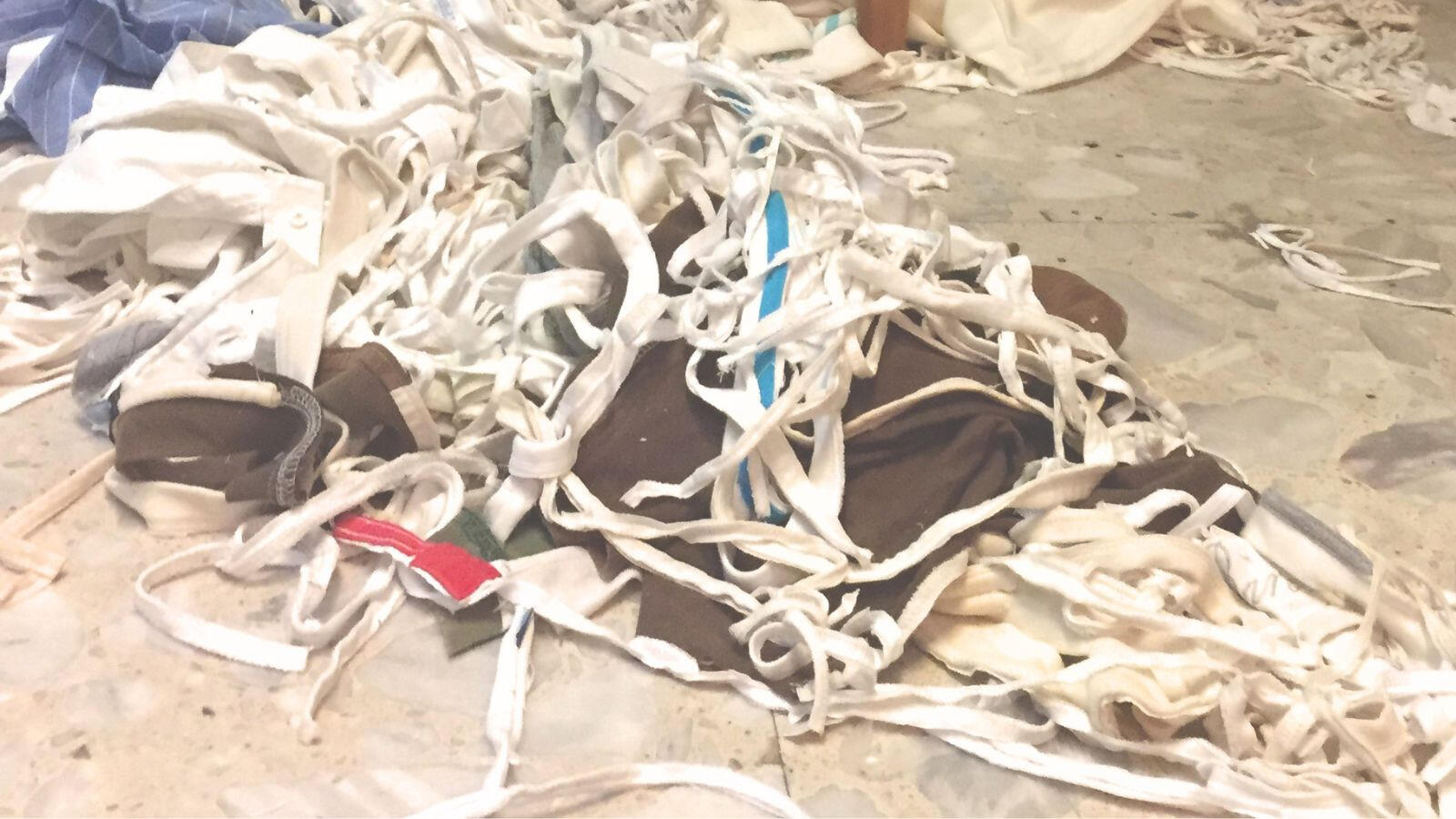
The collected cotton entered a fibre recycling process.
After defibration, the fibres proved too short to spin into durable yarn.
The material itself imposed a limitation.
The experiment did not produce a new textile.It produced a structural limitation.Rather than a conclusion, this became a redirection.Toward repair, transformation, and the continued life of materials.
The experiment did not produce a new textile.
It produced a structural limitation.
Rather than ending the investigation, the experiment redirected it.It shifted attention away from recycling as a universal solution and toward transformation, repair, and the continued lives of materials.Many of HorngWave’s later works began here.
HorngWave is primarily with existing textiles and discarded garments, materials are approached not as resources to consume, but as surfaces carrying memory, labour, movement, and time.The work moves between garments, accessories, objects, installations and community-based making, often focusing on adaptable forms that exist beyond fixed sizing and gender.
Based between Đà Nẵng, Vietnam and Taipei, Taiwan.
For exhibitions, collaborations,
or conversation:[email protected]
@horngwave